Books from Childhood

I’ve been a voracious reader since childhood (if we discount the years from third to fifth grade when I thought books were boring and would much rather have been out playing baseball and tennis than sit and read). From an early age, I would sit in my parents’ laps and listen to stories, or lie on the floor by myself, looking at the pictures in the books and telling myself the stories. (This latter habit led me to strongly dislike that fellow Abraham for several years, until I learned that he never killed his son whom he had laid upon an altar of stone.)

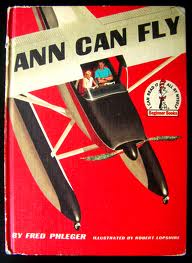
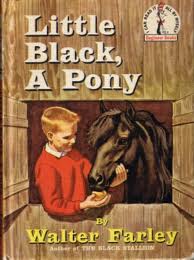
My parents read to my brothers and me as often as we asked and they had the time. But then, once I learned to read, the world opened up to me. This morning, I was looking at my bookshelf and saw some of my childhood favorites, a couple of which I’ve had since childhood, the others which I bought on eBay: Ann Can Fly; Little Black, A Pony; Look Out for Pirates; The Whales Go By. I’ll still read these books today, simply to immerse myself in memories, and the feeling of pride I had as I learned to read each one all by myself.

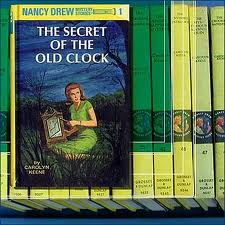
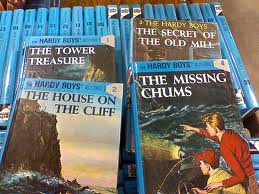
My childhood was replete with sports, activities with my brothers and friends, and travel — but some of my fondest memories focus on the books of my youth. Once I’d passed beyond the Dr. Seuss books, I soon discovered Nancy Drew, and then the Hardy Boys. Not a huge fan of the Bobsey Twins, but I loved the Railroad Children. And how many standalone books did I devour, time and again, haunting the juvenile fiction shelves in our local libraries?
 

This post isn’t simply a trip down Memory Lane, but a reflection on how books helped influence who I am today, what I do, what I love, what I teach my children, what I seek as comfort, and where I draw from for hope and enlightenment.


Today, I continue to read “juvenile” fiction: the entire Harry Potter series, the recent Hunger Games series, The Chronicles of Narnia, and so many more. Fiction books abound, and I’ll never read as much as I want to, but my desire to read was launched when I was a little girl. Really, what better gift can you give a child than a book? If you don’t know what books to give or recommend, I’d suggest looking for the Caldicott Award Winners. Or, look into your memory. What books did you enjoy as a child?

Plot Device

There is a fun film called “Plot Device,” which every new writer, and any writer feeling a sense of stagnation or disinterest, should watch. Watch, and then play this game that I thought of as I watched the film.

Here’s the short film, “Plot Device.” Watch and enjoy.

Now, how do we apply this to writing? Too often, I encounter writers who know where they want their stories to go, but must force the stories along that pre-determined path, insisting on following the story arc even when the characters and developing storyline resist.

To these writers, I say, step back and be prepare to be surprised. As in the film, just see where pushing the Plot Device button might take you. You could be pleasantly surprised. Granted, you could be horrified, as the hero is from time to time in the film, but, like him, you still have the option of hitting the button again and taking a different tack.

Be willing to try something new, something unexpected, in your writing. Without some surprises, you writing will be humdrum and predictable. In other words, your stories will fail.

So, you’re writing a love story, between a young man and a young woman. You want them to meet, encounter some obstacles, and eventually end up together. Great. But the story’s been done. It’s going to take something special to keep your readers interested. Otherwise, yawn. Closing the book.

Let’s hit the Plot Device button. Wait a minute, she isn’t young after all! She’s actually several hundred years old, and uses a serum to keep herself youthful and appealing. What will our hero do now? Will he run from her, frightened of what he doesn’t understand, or will he try to understand her, and grow to love her more, finally devoting himself to her in marriage?

Or, push the Plot Device button again, and he is actually a serial husband, marrying women in different cities around the nation, or the world. The reader finds out, but does the wife? If she does, how does she react? How will you keep the reader interested in this multi-wedder while also maintaining our interest in and compassion for the wife, or wives?

Hit Plot Device again. The lovers have just met, but are doomed to die before they can spend their life together. Oops, nope, that was “Titanic.”

Hit Plot Device again. Just as they are about to be married, the wife falls down a mine shaft (during a picnic) and he dies trying to save her. But she falls in love with one of the rescue workers, so the reader doesn’t feel too bad. Okay, so that’s for a romance novel, where we keep everybody happy.

But it’s as easy as that. If your story isn’t flowing as freely as it should, try using your own Plot Device button, shaking things up, rattling your characters, and getting your creative juices flowing.

Push the Plot Device button. Uh-oh, hadn’t you killed that spider in the cupboard earlier this morning?….

Colin Firth and Honesty

Last night, I watched “A Single Man,” starring Colin Firth, Julianne Moore, and Nicholas Hoult. I had no idea what the movie was about, but enjoyed it for what it was. Simple story, really. A man loses his partner of sixteen years, and decides that his life isn’t worth living. Then the people in his life show him otherwise.

Nothing super-dramatic; in fact, incredibly nuanced. I was intrigued by the director and cinematographer’s use of color tones and hues in the movie, as subtle devices to show the mindset of the main character (George). But what truly brought the movie to life was Colin Firth, whose portrayal of George, while understated, was absolutely honest. Firth outdid Firth on understatement in this movie. It was the eyes first. From the moment he receives the call about Jim’s death, when he sits stunned, and his eyes slowly fill with tears, Firth had me hooked. Tears in his eyes, with only spasms of grief twitching across his face, he  walks robotically around his house, before running to a friend’s house, where his despair and loss pour out. It was all so carefully underplayed. So honest.

From that point on, it didn’t matter what the storyline was, I believed Firth. And, most importantly, I cared about George.

In writing, as in acting, it is vital to make your characters believable. Once you accomplish that, and adhere to the straight and narrow road of honesty with your characters, your book will succeed. You will pull your reader into your writing and make them care what happens to your characters, good and evil though they may be. Once you’ve defined a character, you must be honest with both that character and the reader. Otherwise, your writing will fail.

You cannot create a character who acts like Gandhi in one scene, and then turns and  destroys a town in another. The only way that works (and I think it would make a great character), is if you write it so that others see the character as a Gandhi, but you, as the writer, give the reader the tiniest glimpse of the monster who lurks within. In that way, you have been true to the character and, thus, to the reader. But, thereafter, the reader will know the monster, and the character must abide by that truth. It won’t work if you have the character have a change of heart for a happy ending. Remember in “The Wizard of Oz,” the Wicked Witch of the West dies. There is no miraculous transformation as a result of her interaction with the purity of Dorothy and her friends (especially Toto). No, that could never be. She was evil, and evil she would remain until her death.

So it is with your characters. Once you have defined them, so they must remain. Of course, there is some character transformation that can take place, growth and change through atonement, for example, but the seeds of that growth and change must already lurk beneath the surface, and must have already been infinitesimally visible to the reader. In that way, you stay true to your characters, and honest with the readers.

Before you begin writing, know your characters, inside and out. And look for those little hints, the tiniest suggestions, of possible growth and change. These tidbits can surprise you as a writer, and delight your readers.