Write Your Memoirs, At Least A Few

I continue to teach my Memoir Writing Workshops in San Diego, and each week I am struck anew by how important it is for each of us to write our memoirs. It doesn’t matter whether we write to publish, but we should write not to perish.

Our stories can be the greatest legacy we give to our children, or to those who come after us. No two people have the same story; it’s simply impossible. Each of us has been dropped into the river of time, within a family, within a legacy already written. We each then go on to form our own legacies, and that is the gift that we can give to others.

I am as guilty as most people who think, who cares? My kids won’t be interested. I’ll just be writing for myself. But when I listen to the stories in my classes, I realize the treasure being conveyed. Stories about the author, about the family that came before and the family that they joined. If not now, then later, these stories will be valued beyond the writer’s greatest expectations, because they will be a piece of the writer, a touch with what has passed.

My class members write about their first encounter with spouses, about moments of great childhood pain that imprinted the adult, and about people in the family long gone, bringing them, if only briefly, back into the flow of time, remembering that they existed and mattered for one moment. What more can any of us ask?

Take the time, as I vow to do, to write about your life. You don’t have to write chronologically. Just jump into a moment in your life and write. Whatever you put to “paper,” your family will enjoy. And if you never share it, at least you will relive the memory and the moment. You don’t have to write about the dark times, not if it’s still too painful. Write, instead, about a childhood triumph, even if it’s one only you know about or might remember. Or write about a fear that haunted, but was then overcome. Or about that game where you made the difference. This can be cathartic, but it can also be invigorating. Remember the you you used to be? Reclaim yourself, as you remember yourself. And live the you you once knew. I dare you!
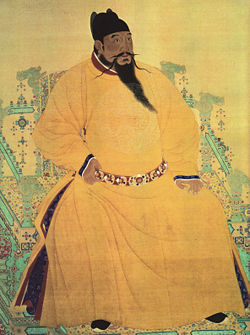
Chinese Everything: The Yongle Encyclopedia

In my editing of a volume about lexicography this week, I came across a reference to a Chinese encyclopedia written in 1408. This was a handwritten encyclopedia of all Chinese knowledge at the time.

Called the Yongle Dadian (Great Canon of the Yongle Era), it comprised no fewer than 370 million Chinese characters and 22,937 manuscript rolls, bound in 11,095 volumes. Remember, handwritten.

The Canon covered history, philosophy, Buddhism, Taoism, drama, arts and farming, and many other topics, including unusual natural events. The content, which was partially transcribed character by character as exact copies of original texts produced during the previous decades, is structured according to a rhyming system for the characters and is also accessible through a complex system of indexes which, together with the preface, comprise 60 chapters in and of themselves. The idea was to make a complete canon of existing texts within a wide range of subject matter at a critical historical moment, when China was recovering from several devastating conflicts and needed this knowledge.

Some two thousand scholars worked on the volumes during the reign of the Yongle Emperor, incorporating eight thousand texts from ancient times up to the Ming Dynasty.

Because of the vastness of the work, it couldn’t be block-printed, and it is believed that only one copy of the volume was made at the time. A third copy was ordered transcribed after a fire burned the Forbidden City. Today, only 400 volumes survive. The original has disappeared, either burned, or destroyed, or perhaps buried in the tomb of the emperor Jiajing, who had ordered the second copy made.

Today, the most complete of the surviving Ming volumes are housed in the National Library of China in Beijing. Private collections house other pieces of the work.

I can’t help but imagine the treasure lost to mankind with the disappearance of the original manuscripts, as works of art, a collection of knowledge, and a trove of Chinese thought and history. Along with the volumes lost from the library at Alexandria, perhaps one day these volumes will be unearthed and finally brought to light again. One can dream.

Periodic Table of Storytelling

This is one of the reasons I avoid trolling the internet when I have work to do. I’m liable to find delightful time-wasters like this.

The final project of Computer Sherpa for a Visual Design class, this Periodic Table of Storytelling is endlessly intriguing and enlightening.

The table can be found here, with working links and an explanation: http://computersherpa.deviantart.com/art/Periodic-Table-of-Storytelling-203548951 .

It looks like the Periodic Table of Elements that we each encountered at least once in school, but instead of basic elements of matter, these are basic elements of storytelling. Click on any element to see the name of that aspect of storytelling. For example, click SUS in the rightmost column, and you’ll find: Willing Suspension of Disbelief. Then, go to tvtropes.org to read more about that basic element.

Warning, once you start, you’ll find it’s hard to stop. TVTropes.org has done a fantastic job of defining and illustrating these storytelling concepts. You’ll look up and realize you’ve been lost in Wonderland for hours!

Enjoy, and drop the creators a line to let them know you’ve visited. They’ll appreciate it, I’m sure.

Him Equals Whom

Today, I’m going to plagiarize. Well, actually, not really. I’m going to pay homage to the woman who originally wrote most of this text (Mignon Fogarty), and then repeat what she wrote. This has to do with the subject of “who vs. whom.”

As I edit books, I am continually confronted with this issue, and lord knows that we hear the rules broken every day. But who among us knows the rule? Mignon Fogarty does. And she explains it very well. As for me, I will never doubt what I know again. She has given me solid grounding in the rule and I’ll never forget it.

Taken from her website, Grammar Girl, http://grammar.quickanddirtytips.com/who-versus-whom.aspx, this is what she writes:

“First, to know whether to use who or whom, we need to talk about the difference between subjects and objects because you use who when you are referring to the subject of a clause and whom when you are referring to the object of a clause.” Don’t panic. She doesn’t leave us in the lurch with that statement, but goes on to clarify:

“If we think about people, the subject of the sentence is the person doing something, and the object of the sentence is having something done to them.” Subjects do, objects have done to them.

For example, “If I step on Squiggly, then I am the subject [doing the stepping] and Squiggly is the object [being stepped upon by me].”

Still clear as mud? Well she goes on to clarify still further: “Here’s my favorite mnemonic: If I say, ‘I love you,’ you are the object of my affection, and you is the object of the sentence [I am doing (loving) something to you]. I love you. You are the object of my affection and my sentence. It’s like a Valentine’s Day card and grammar mnemonic all rolled into one.”

Finally, Mignon gives a “Quick and Dirty Tip”:

“Like whom, the pronoun him ends with m. When you’re trying to decide whether to use who or whom, ask yourself if the answer to the question would be he or him. That’s the trick: if you can answer the question being asked with him, then use whom, and it’s easy to remember because they both end with m. For example, if you’re trying to ask, ‘Who (or whom) do you love?’ the answer would be, ‘I love him.’ Him ends with an m, so you know to use whom [in the question]. But if you’re trying to ask, ‘Who (whom) stepped on Squiggly?’ the answer would be, ‘He stepped on Squiggly.’ There’s no m, so you know to use who.

“Just remember, him equals whom.”

In an Elevator

So the question is, who is the last person on earth that I would want to be stuck with in an elevator, and why?

While several specific people come to mind,  she of the bathing suit at the Y, for one, I will instead write about a type of person, rather than a specific one.

I would abhor being stuck in an elevator with someone who doesn’t read. Not quite as bad, but still bad, is someone who only reads self-help books. But mostly, I would find it difficult to spend time with anyone who doesn’t read to expand their horizons.

I know that there are those people who don’t read fiction, not wanting to waste their time on anything that “isn’t real,” while there are others who read only fiction, not wanting to waste their time on biographies or history. But give me a person who reads, and I’m sure to find something to talk about with that person. Even if it isn’t something about which I am particularly interested, I know I will learn something in the time we speak. Recently, at jury duty, I made a point to try to meet the other eleven people in the jury. I spoke with a recent college graduate who answered my queries  shyly at first, and then with greater animation, as he told me of his desire to go into speech therapy analysis and the reading he has been doing on the subject; an older gentleman who had been with the CIA before becoming a master chef in New York, before becoming a dealer in fine jewels, selling to the original founders of the great jewelry stores such as Tiffany’s; a woman who is a “WWII orphan,” one among several hundred thousand of such children who lost their fathers in the Second World War, and who now writes about the research being done to link these orphans with the stories of their fathers’ war experiences; and  a man whose hero was Sandy Koufax, and who knew every detail about Koufax’s life; and several others.

The point is, I found something to speak about with each of these people because they  were interested in life beyond their own noses, and each turned out to be a voracious reader. Once we found we had that in common, the rest was a walk in the park. They knew about the world beyond their limited experience and they sought to know more through books.

I have neighbors who do not read. While they are nice people, I find I have little to speak about with them. They have opinions set in stone, circumscribed views on the world around them, and no interest in the lives of others who differ from them. They are like a cousin of mine who proudly declares, “Europe has nothing to offer me. Why would I ever travel there?”

Words and Meaning

I suppose it is inevitable that I became a writer and editor. Words have always held great importance for me. The precise word for a precise meaning: a concept vital to me as a child, and still.

I remember contemplating the difference between the word “marriage” and the word “wedding,” knowing that these two words, while sometimes used interchangeably, meant something very different. Because I couldn’t formulate my question properly at the age of seven, I didn’t receive a clarifying answer when I asked my mother about the difference. The question continued to haunt the recesses of my mind, until at the age of nine I finally figured it out. A wedding was the ceremony that joined two people into a partnership called marriage. The wedding was a one-time event, and the marriage was the result. Don’t laugh. I felt immensely satisfied to have figured that one out on my own.

Then there was the night when I learned that it was, in fact, the Civil War, not the Silver War. I had asked my brother, by spelling, if he wanted to go play “S-I-L-V-E-R W-A-R” with his Army men after dinner. My father overheard and corrected me. As he and Mom often did. A fact for which I am eternally grateful.

I also learned, by similar means, that one made a cavalry charge when one played cowboys and Indians, not a Calvary charge.

Even today I am enchanted by language and words. PD James is one of my favorite authors because of how she finds the absolutely perfect word for what she means to write. When her character Adam Dalgliesh is sitting in a fire-lit room with his aunt, she writes: “The firelight threw gules on her long face, brown and carved like an Aztec’s, the eyes hooded, the nose long and straight above a wide mobile mouth.” I was enchanted. What was this word “gules”? I looked it up. It means the tincture of the color red, but in heraldry it also means an area marked with vertical lines. This blew me away. I could SEE the aunt’s face, tinted slightly red, with vertical wrinkles at the sides of the mouth, and on the cheeks. Who but PD James would use a word like gules to such an effect?

I am adamant about the importance of word use and word choice and fervent in my belief that we retain an important edge when we know and use our language to precise effect.  Too often, we are lazy with our language, and I think that we, as a culture, suffer as a result.

The Play’s the Thing

I recently finished editing a volume on Herman Melville’s aesthetics (who knew there was MORE to find in his fabulous writing?), and then edited a book on early Greek thought in light of modern philosophy (a book that left me untouched, and slightly bewildered as to the why of its existence), and now I am editing a book on Shakespeare’s King Lear.

This is the fun part of my job. As I edit, I am constantly Googling, looking up references from the books, for my own edification. The chapter on productions of King Lear throughout the centuries led me to read about David Garrick and the early theater productions of Shakespeare, and then on to read about Ian McKellen and Laurence Olivier and Michael Gambon, and on and on. Sure this takes more time than just reading the book and editing it, but I’m learning so much as I do this extraneous research. Learning for my own knowledge, but also to benefit me in the long run as I continue to edit. The more I know about a broad swath of subjects, the better I’ll be at my job.

In addition to doing research on many of the actors named, I did research on staging of productions, both British and American, which led me to a staging in Taiwan’s Contemporary Legend Theatre, with a one-man production called “Lear Is Here,” starring Wu Hsing-Luo. From there, it was an easy leap to a Russian production, and then back again to television productions. But it was the understanding of stage sets and lighting that fascinated me, as they enhanced the written work of Shakespeare’s script with lighting and imagery that prompted different emotions from the viewers than would ever have been prompted by the text alone.

The text is the beginning, but beyond the text, there is so much that can be added, through the actors, the music and sound effects, the set, the lighting, and the costumes. I can’t help but wonder what Shakespeare would have thought about the productions since his time. I’m certain he would have been as enchanted as I, if not more so. Imagine if he were writing today, with the music, the visuals, the sounds available. But would his text have been a solidly foundational now as it was then? I wonder. Nevertheless (shaking my head to clear my mind)…we have his texts, and the play’s the thing!