Let Your Characters Speak

In my previous post, I explained that many new writers don’t know how to let their characters develop into full-blown beings. I suggested that allowing the characters to speak is an excellent way to finding out who your characters are. Here is an exercise I use with my writing clients.

What a character doesn’t say can be just as important as what the character does say. In the conversation, if a mother feels she is being manipulated by her teenage daughter, she doesn’t have to call the daughter on it, which is what many new writers would have their characters do. Instead, once she recognizes what’s going on, she might stop talking. Not say a single word. What happens then with the daughter? She can’t ask outright if she’s been discovered as a manipulator, and she won’t know whether to keep on the original track. Suddenly, her wheels are spinning in the mud. And her mother hasn’t had to say a thing. There is immediate tension there.

In the interview process, most of my students initially use the exercise to introduce their characters, almost a word-for-word recitation of their character descriptions and bios (if they’d bothered to create those before they began writing). The interviewer is simply a springboard for revealing character. Most writers are surprised when I “bleed red ink” all over their first drafts. But I explain that this hasn’t been an interview at all, in most cases, since the interviewer is simply feeding the character openings for plugging in information.

For example, here’s a common kind of exchange:

  • Interviewer: Can you tell me a bit about what makes you tick?
  • Character: Well, when my parents died in a car accident when I was little, I vowed to do something with my life that would make them proud of me. That’s why I’ve started this project where we teach art to special-needs children. It’s our belief that these children need an outlet for their creativity, a way to express themselves. I can tell you stories about some of the students…..(and off the character goes, outlining her successes).

For the reader, this provides information, but there’s no drama, no tension…no interest. It’s like reading a newspaper article about something that happened. They get hearsay, but have no experience of the event.

How much more powerful would it be if the interview went like this:

  • Interviewer: Can you tell me a bit about what makes you tick?
  • Character: Tick? That’s an odd question.
  • [I]: Is it? Isn’t there something that drives your life? Makes you who you are?
  • [C]: What do you mean?
  • [I]: Well, you’re the first twenty-five-year-old woman I’ve ever met who set up a school of art for special-needs children, working with no funds. What made you choose that as a life goal?
  • [C]: I guess it started when my parents died in an accident when I was little. I decided then to do something with my life to make them proud of me. That’s–
  • [I]: How old were you when they died?
  • [C] (taken aback a bit by the interruption): Five and a half.
  • [I]: That’s awfully young. And you knew then that you wanted your life’s work to make them proud?
  • [C]: Well, not then, of course. As you say, I was young. As I got older, I realized it was important to me.
  • [I]: Why?
  • [C]: Why? Well, doesn’t every child want their parents to be proud of them?
  • [I] (ignoring the question): Do you remember your parents?
  • [C] (pausing): Yes. Of course. Well, as well as a five-year-old can remember parents after twenty years.
  • [I]: Can you still see their faces?
  • [C]: Not really, no. I mean, I have photographs, of course. But my own memories, no. They’re more just impressions, rather than memories.
  • [I]: What impressions?
  • [C]: I remember my dad’s smile.
  • [I]: Did he smile a lot?
  • [C]: No. In fact, it was rare to see it.
  • [I]: Do you remember a particular time when he did smile?
  • [C]: Clearly. I’d painted a picture for him. It was probably horrible, as only finger-paintings can be, but it was my version of Rapunzel, with the girl’s long hair falling out of a castle window.
  • [I]: But your father liked it?
  • [C]: Yes. (She pauses.) I remember that he pulled me against his chest as he held the picture out at arm’s length to examine it, and then he kissed my cheek and smiled. If he said anything, I don’t recall. But I still see that smile.
  • [I]: In your mind’s eye?
  • [C]: Yes. And, oddly enough, every time  a parent picks up their child at the center and smiles at what they’ve drawn that day.
  • [I]: So, the therapy isn’t just for the children, is it?
  • [C]: You know, I’d never thought of it that way.

This is pretty much the same information given to the reader in both instances, but how much better do you know the character in the second example? You’ve experienced the information, not just had it handed over to you in a neat little package. Of course, the interview could have gone in several other directions, but that’s the risk and the possibility when you, as the author, allow the characters to respond truthfully to the questions asked, especially when the questions are probing, and not just lob balls to be hit out of the park.

One of my constant refrains to my writing students is this: give your characters room to breathe.

Meet Your Characters

I’m working with a couple of new  clients as they take the next step in writing their first books. As is common with many new writers, they have an idea for a story, and have thought out where they want the story to go, but their characters are cardboard cutouts, useful to them only for furthering the story. So far, they have no idea how rich the characters can be, or the depth they can add to a story.

What they don’t yet understand is that if they want readers to care about the story, the readers must first care about the characters, and what happens to them in the story. Who are these people, I ask. The reply is basically, well, this is the main character, this is another character, and this is another. They have no real idea who the characters are, what their backgrounds are. Without knowing that, they can’t write honest actions and reactions for these characters.

I tell my clients that they must let the characters BE. Don’t have them talk and react as you need just to continue the story. Allow your characters to surprise you. You don’t have to let them derail your story, but allow them to speak their minds, to react honestly, and you’ll see some great developments in your story.

One of the exercises I do in my classroom and with my freelance students is to have them write two scenes: one is a conversation between two characters, and one is an interview between the writer and a character. That’s it. That’s all the info I give them.

Once they’ve written the scenes, we talk about what works well, and what doesn’t. The most frequent problem is that the author has dictated the scene. Well, of course, you say, the author is dictating, because the author is the writer. But that’s not what I mean. In order for the conversation to work, the author must let go of the reins. The characters must be allowed to wander off topic, if to do so will tell us something about that character. The author must be willing to be surprised by the character.

I’ve written characters who I thought I knew, only to find out, once I let them have their heads, that I didn’t really know them at all. One character in a story of mine, a wife named Mamie, was supposed to be a supporting character. It was her husband I was interested in. But it turned out, Mamie didn’t want to be a supporting character. She had things to say. She had things to do. She very quickly over-shadowed her husband, and I think the story was the better for it. Mamie surprised me, once I quit shoving words in her mouth and telling her what to do.

In the next segment of this post, I’ll show how this exercise is handy for getting your characters speak in their own voices.

Do Do That Voodoo That You Do So Well

I’m struggling to learn Portuguese right now. I study my Aquarela book every day, and at night if I watch TV, I watch with Portuguese subtitles on. I’m amazed by how many words I already know, and by how many are similar to words in English or French or Spanish. My reading is going well, but my speech is slower, and my understanding when hearing the language spoken is still lamentable.

I’ve learned to say “No falo português,” and more recently, “Aprendendo português ainda, por favor fala mais devegar” (I’m still learning Portuguese, please speak more slowly).

It’s not a difficult language; there’s just a lot to learn. I speak French, know some German, and can understand Spanish and some Italian. I suppose I have a facility for language, and I love the richness and diversity of the English language.

I’ve heard that English is difficult to learn, and remember Ricky trying to learn the rules from Lucy on “I Love Lucy.” (It’s cough, as in coff, but through as in thru?)

Last weekend, our taxi driver told us he found learning English was incredibly difficult. I said I was a bit surprised, since the structure of the language is the same (unlike German, where the verb goes at the end of the sentence) and many of the words are similar, if not identical. But it wasn’t structure or vocabulary that troubled him. It was the word “do.”

Do you like pineapples? I do. What do you do? How do you do? Do you understand?

In other Latin-based languages, you don’t (do not) have an equivalent. One asks the equivalent of: you like pineapples? Yes, I like them. What is your job? How are you. You understand? There is no “do” in those phrases. I’d never thought of that.

No only is the function of the word a mystery, but you must also now conjugate two verbs in a single sentence: What do you do? What does he do (not does)? How do you (plural) do.

And then there is the use of the affirmative, and negative in English compared to Portuguêse.

Do you speak English? I do/I don’t.

Do you speak Portuguese? I speak. I no speak.

Do you like hamburgers? I do.

Do you like feijoada (a Brazilian bean dish)? I like/I no like.

Who know that this do had such voodoo? A simple two-letter word had brought this man to his knees, figuratively speaking.

Leonard Wibberley

I’ve just rediscovered an author that I had read in my childhood, and who I now will read with greater enjoyment, I’m sure, as an adult. His name is Leonard Wibberley, and he is the author of the Mouse That Roared series of books, as well as more than a hundred other books of fiction and non-fiction.

I don’t know why, but I had a sudden hankering to read The Mouse That Roared, and so looked up Wibberley on Amazon. I had no idea he’d written so prolifically, nor about so many different subjects. Currently on my reading list are the Mouse books, about the Duchy of Grand Fenwick, a small island nation that takes on the superpowers of the world, thinking that if they are defeated, the victors will take care of them, saving them from bankruptcy and ruin. As fate would have it, however, the Duchy continues to vanquish their opponents, and are stuck trying to figure out what to do next. I remember the humor of the books, and I suspect I’ll get more of the irony reading them now.

Also on my to-read list are several of his other books, among them The Quest for Excalibur, The Testament of Theophilus, The Trouble with The Irish (or the English, Depending on Your Point of View), and Ah, Julian! A Memory of Julian Brodetsky.

Wibberley also wrote numerous novels for juveniles, which I will also read, since that’s one genre in which I’m plan to write. Among my favorite “juvenile fiction” novels are April Morning, Johnny Tremain, and the Wrinkle in Time books (or anything by Madeleine L’Engle), and anything by Anthony Horowitz.

Given all the academic books I’ve been editing lately (see the Editing tab of my website: http://www.annaubrey.com), I am eagerly anticipating the time to reread many of these books, and find new ones along the way.

If you have some favorite juvenile fiction books, I’d love to hear your suggestions.

Cyber Books Don’t Stick

For the past year, I’ve been reading most of my books on the Kindle or iPad. It’s just so handy to carry my library with me that way, and the books (while not cheap, as if digital printing costs a lot) are less expensive.

Plus, when we moved at the end of the year, I had to give away half of my carefully accrued library, which bruised my soul. So, I figured, fine, I’ll just get books online now.

(That photo shows one of three trips I made to give books to the local library.)

But I’ve discovered something interesting. I don’t retain the books I read online nearly as well as I do printed books, and I’m not talking possession. I’m talking in my brain. When I try to recall the ebooks I’ve read in the past year, I have a vague recollection of the story and plotline, but most of the particulars are hazy. On the other hand, when I try to recall books I’ve read on the page, they seem to stick with me. Fact.

I read somewhere that the human brain doesn’t retain as much when the print is digital versus ink. I’ll have to look for those articles again, because I think I’m living proof of that truth. eBooks are definitely more convenient, but I think I’ll reserve eBooks for those quick reads (the Lee Child books), and save actual printed books for those I want to savor and enjoy again and again (PD James, Meg Gardiner, Laurie R. King, C. S. Forester, etc.).

Of course, that means I’ll rebuild my library, but I must. It’s part of who I am. I’m a reader and a writer. I own books. I love books. I need books.

Brave New Words Coming Soon

According to National Geographic magazine, there might soon be some words added to the venerable Oxford English Dictionary. Yes, languages are living entities and should change over time. It appears that the time has arrived, again.

According to NatGeo, “Wide, long use is key….Fresh words or meanings are added to a database and their usage is tracked for up to ten years. If [the word] ‘cankle,’ for instance, pops up often enough [in books, magazines, newspapers, and various online sources], it may be one of the 4,000 words–out of 6,000 considered–that make the cut each year. Then it will be here to stay.”

Among the words being considered are:

beer jacket: the supposed insulating effect created by being drunk

cankle: thick ankle

earworm: a catchy tune that gets stuck in your head

face palm: an expression of exasperation or disbelief (palm goes to face)

guy liner: eyeliner for men

wibble: the trembling of the lower lip just shy from actual crying

xenolexica: a state of grave confusion when faced with unusual words

As a wordsmith, I particularly enjoy the last one! As a writer who tries to stay current, I realize that I need to keep tabs on today’s living language. It’s getting harder and harder, as new technology forces new words into our living lexicon. But I try to stay relevant. And now, I shall dip.

The Power of Words

Today, there are so many people–politicians, actors, athletes, university presidents, etc.–who stand before their audiences and pontificate on whatever subject is near and dear to them. So many times, my eyes just glaze over as I try to listen, generally because they beat an idea to death, and use too many words to do it. It’s not simply a matter of telling your audience what you’re going to say, saying it, and then telling them what you said. That is painful enough, but they also have to repeat the ideas from several view points, just in case you missed it the first time.

Then I read some of the great speeches of the past. George Washington’s Farewell Address of 1796 comes to mind, an excerpt of which I quote:

“I have already intimated to you the danger of parties in the State, with particular reference to the founding of them on geographical discriminations. Let me now take a more comprehensive view, and warn you in the most solemn manner against the baneful effects of the spirit of party generally.

“This spirit, unfortunately, is inseparable from our nature, having its root in the strongest passions of the human mind. It exists under different shapes in all governments, more or less stifled, controlled, or repressed; but, in those of the popular form, it is seen in its greatest rankness, and is truly their worst enemy.

“The alternate domination of one faction over another, sharpened by the spirit of revenge, natural to party dissension, which in different ages and countries has perpetrated the most horrid enormities, is itself a frightful despotism. But this leads at length to a more formal and permanent despotism. The disorders and miseries which result gradually incline the minds of men to seek security and repose in the absolute power of an individual; and sooner or later the chief of some prevailing faction, more able or more fortunate than his competitors, turns this disposition to the purposes of his own elevation, on the ruins of public liberty.

“Without looking forward to an extremity of this kind (which nevertheless ought not to be entirely out of sight), the common and continual mischiefs of the spirit of party are sufficient to make it the interest and duty of a wise people to discourage and restrain it.”

Are we not living today this very conflict of which Washington spoke? And how succinct was his warning. What politician or pundit today could be so powerful, so forceful, in so few words?

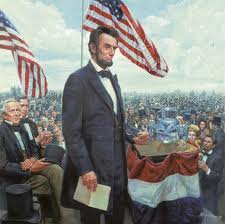
And then we have Abraham Lincoln, who wrote almost in sound bites, his wisdom thus easily recalled, as in the Gettysburg Address:

“Four score and seven years ago our fathers brought forth on this continent, a new nation, conceived in Liberty, and dedicated to the proposition that all men are created equal.

“Now we are engaged in a great civil war, testing whether that nation, or any nation so conceived and so dedicated, can long endure. We are met on a great battle-field of that war. We have come to dedicate a portion of that field, as a final resting place for those who here gave their lives that that nation might live. It is altogether fitting and proper that we should do this.”

Or Mohandas Gandhi, speaking of Christianity:

“A man who was completely innocent, offered himself as a sacrifice for the good of others, including his enemies, and became the ransom of the world. It was a perfect act.”

Who do you know today who speaks with such clarity and simplicity?

I have been editing two books recently, one a work of fiction and the other of non-fiction. Worlds apart in subject and in writing style. The fiction book would be better as a screenplay, since the novelist writes dialogue better than he writes narrative. But both are blessedly brief. He doesn’t overwrite (except when he uses a thesaurus instead of his own vocabulary, which then brings the author into the story…which is a major blunder).

The non-fiction writer is writing a theology book, and with each sentence was attempting to address every possible argument that sentence. It was extremely draining to try to read. I understood his reasons, but was able to convince him that his sentences were too dense, that if he ever hopes to have the tome read completely, he had to lighten the load of every sentence. Taking my advice, he edited and pared, and the result has been striking. His insights leap off of the page now, freed from the burden of unnecessary words.

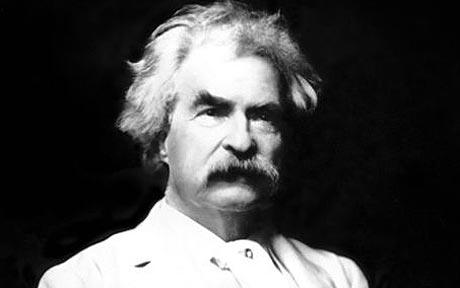
As you write, read. Read literature and famous speeches, and notice how the authors have made their language work for them. As Mark Twain said, write as though you must pay for the words you use. A typical Twain thought, carved to the bone and yet full-figured:

“Anger is an acid that can to more harm to the vessel in which it is stored than to anything on which it is poured.”