‘Alphas’ on SyFy: Am I An Alpha?

The SyFy channel is offering a new series this summer, “Alphas,” which is about run-of-the-mill humans who each have one extraordinary trait, the Alpha trait, which sets them apart from the rest of mankind. (David Strathairn, a favorite of mine, is one of the leads.) One character is able to sense what events transpired in a room by “reading” objects, pulling from the objects the scent of sight and sound of what has transpired. Another is able to manipulate the thoughts of others, enticing them to act as she desires, whether encouraging a Highway Patrol Officer to eat the ticket he had written for her, or convincing a truculent hotel clerk to give her forbidden guest information. My favorite is the Alpha who can see certain non-visible waves, such as cell phone transmissions or the Internet. I love the fact that he can scroll through the waves, searching the air as though he had a computer touchscreen in front of him.

So, this got me to thinking. Say I were an Alpha, what special powers would I have? I don’t have stupendously accurate hand-eye coordination. It’s good, excellent, in fact, but there’s nothing Alpha about it. I have a will of iron and can often convince others to do my bidding. But, again, nothing extraordinary, so no Alpha trait there. I’m attuned to the emotions of others, and can read a mood or environment well, but an inanimate object remains inanimate in my hands, unless I chuck it across the room. No sensory feedback, so no Alpha trait.

But, wait. I have this innate ability to proofread, and have had since I was a child. I’m forever finding errors in signage, books, menus, and newspaper articles, wherever the written word exists. If there is an error, chances are I will find it. This seems to be an inherited skill, passed along to me by both parents. (I wonder whether all Alpha traits are inherited?) When I take editing tests, as I must do for every new publisher client who wishes to hire me, I feel I’ve failed if I find 98% of the errors, though my potential clients are thrilled. That 2% niggles at me, driving me to improve the next time. Okay, so maybe there’s no Alpha trait there, given a 2% error rate, but that’s my best guess as to any latent Alpha ability I possess.

Not sexy, I know. How would they even use me on the series? Alpha Editor! Maybe I could compare a recently delivered hijacker note to previously known hijacker notes and see a pattern for identification, but I don’t really see myself saving the free world with that talent.

And so, I remain unknown, flying under the radar of the DOD (Department of Defense), righting wrongs in my own little world, but unsung and unchallenged on the world stage. Still, I am content. I am Alpha on my own stage. The Master Editor of all I survey. (David Strathairn, I’m here if you need me.)
Music for Writing and Editing

I frequently get recommendations for new music to listen to from my son and daughter; they know what I like, and often find new groups, or groups I’ve never heard of, for me to try. One of my current favorites is Mumford and Sons. Another is Aqualung.

But I find that I can’t listen to their music, or any others where lyrics are featured, when I am editing. No matter how hard I try, I cannot keep the words of the songs from registering on my mind, and interfering with the task at hand–that is, editing other people’s words. For editing, my choice is classical music, preferably symphonic. I’m not a lover of classical piano music or violin features, but give me the full symphonic sound and I can happily edit for hours. Sometimes, if I’m in a specific mood, I’ll choose specific composers (Vivaldi, or Moussorgsky, or Wagner, or Telleman, or Mozart). Other times, I leave the selection to Pandora, willingly accepting most of what I am offered.

On the other hand, if I am writing fiction, I often choose music with words, especially if I am trying to feed a certain emotion, or build an environment for myself in which to write. Oddly, I think most people would say, I find that music from the Civil War is great for eliciting emotions of various kinds. I also like Edith Piaf, for other emotions. And Marian Anderson, Paul Robeson, and Mahalia Jackson are great for  depth, as they plumb the soul.

I can’t listen to music constantly throughout the day; my ears simply get tired and it all becomes just noise. But I know when I need to feed my mind, my spirit, my emotions…or simply get carried away as I edit, lifting my mind off the page and into that realm where I work without effort or noticing the passage of time.

The Dark Ages: Before Google

What did writers (and editors) do before Google? I am constantly looking up information on Google as I edit academic books, verifying the spelling of names, dates, events, and any number of items which I, as editor, must ascertain are correct.

And I can do so by simply typing in the Google search box. Question on the Kosovo conflict? Thousands of hits at my fingertips. Uncertain about how Kafka viewed the unconscious, more hits. Need the names of the Secretaries-General of the United Nations? Voilá. And what is the difference between a barque and a junk? No problem, and here are photos to clarify further.

How did editors do this before now? Did they spend all of their time in academic libraries, scanning volumes and journals? I simply don’t know. Perhaps there were fact verifiers in addition to copyeditors, whose job it was to check this sort of information. I’ll have to ask someone who’s been in this business longer than I have. Meanwhile, it falls to me to check, and so I do. With gusto, and with the sense that I learn something with every mini-hunt I pursue. With each search, I push my own personal Dark Ages a bit further behind me, opening the doors to Enlightenment.

I feel my knowledge increasing on a daily basis, as I learn multitudes of new facts while scanning the Internet. As a friend said, I’m pursuing a PhD in Everythingology in my current career. And it’s all free (barring the Internet fee I pay to my provider). May it ever remain so!

Hold At All Costs

In discussion about a possible editing gig,  Glenn Palmedo-Smith told me about a film of his that was shown on PBS on or around Memorial Day 2011. The film is called Hold At All Costs and is about the battle for Outpost Harry during the Korean War. Palmedo-Smith sent me a link to the film’s trailer, which has certainly intrigued me. Having seen the entire film now, I can recommend it wholeheartedly. It is informative, gripping, and touching in the most unexpected ways.

A brief history of the battle for Outpost Harry. During the eight-day battle, five United Nations Command companies, four U.S. and one Greek, defended the hill in the Iron Triangle near Seoul from the attack of some 13,000 Chinese soldiers, under orders to “hold at all costs,” not knowing that the Chinese soldiers had been told to take the hill “at all costs.” And thus, eight days of hell ensued, with most of the fighting taking place at night. In the film, survivors from both sides of the conflict talk about the horrors of the week and reflect upon its meaning. The film ends with images of South Korean today, a land the UN had estimated it would take 100 years to rebuild. The closing credits include the names of those killed in the battle for Outpost Harry. The American list is long, the Greek list short, the South Korean list longer, and the list of Chinese names grows as the credits advance, until ten columns of names in tiny Chinese script fill the screen. Horrifying.

This is an excellent film about a war that was forgotten or ignored for too long by a country whose leaders called its young men to give their lives on that foreign soil. I highly recommend it if you can find it on television (PBS showed it over the Memorial Day weekend).

The interesting thing about all of this is that I doubt that I would ever have encountered this film had it not been for my initial contact with Palmedo-Smith concerning editing on a different project, completely separate from the film. Again, I am delighted and amazed by the connections I make through my job, by the new horizons that open to me.

Providence? I’m thinking, yes.

One thing leads to another when you are a writer with curiosity about and interest in the world around you. To all writers out there, I say keep your eyes and ears open. You never know from where your next gem of inspiration might arise.

“Snaders” and Times Past

Today, while editing a book on the dance and music of the 1950s, I came across a term I’d never heard before, “Snaders.” Snaders were 3-minute films made in the 1950s to be shown on television, documenting live musical performances by classical and popular artists.

As I usually do when I encounter something new, I immediately looked up “Snaders” on the internet and found several of the films (also known as “Soundies”) on YouTube, such as the one here:  http://www.youtube.com/watch?v=c5DzXKXNauM&feature=related. And yes, I did have work to do, but I found myself browsing through the different films and looking up some of the performers. Finally, I knew I had to get back to editing, but I’d learned a great deal in the meantime.

That is one of the tremendous benefits of this job of book editing. I encounter so many people, events, ideas, and creations that I have never heard of before. When I take the time, I learn so much! even more than just what I’m reading and editing.

Do you know what The Madison is? It’s a dance from the 1950s, made popular again by the play “Hairspray.” But it was created in 1957 in Detroit and swept the nation. A completely new dance, providing a change from the Lindy-inspired Jitterbug. Or what about the Hand Jive. Do you know how to do it? It was revivified by the film “Grease,” but I could never learn it by watching alone. Found a website featuring instructions on how to do it today. Now I know how.

In the same book, I read a reference to Rosa Parks. While I know her story in broad strokes, I took the time today to do more in-depth reading about her. I think she was a lovely lady, well educated, soft spoken, and innately dignified. No wonder she was the poster child for Civil Rights. She hadn’t planned to make trouble, but at age 42, she’d had enough. So she held her legal ground. And opened up American society by that quiet, dignified action.

No matter what you are writing about, no matter what your job, I can’t encourage you enough to take the time and browse the internet. Any time you run across a term, event, person, or phrase you don’t recognize, look it up. You’ll be amazed by how vast and varied our world is. Here, I’ll start you off. Look up the word “quire” and read about how it came to be and what it means. Enjoy!

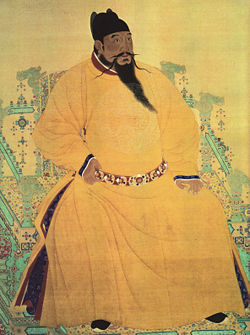
Chinese Everything: The Yongle Encyclopedia

In my editing of a volume about lexicography this week, I came across a reference to a Chinese encyclopedia written in 1408. This was a handwritten encyclopedia of all Chinese knowledge at the time.

Called the Yongle Dadian (Great Canon of the Yongle Era), it comprised no fewer than 370 million Chinese characters and 22,937 manuscript rolls, bound in 11,095 volumes. Remember, handwritten.

The Canon covered history, philosophy, Buddhism, Taoism, drama, arts and farming, and many other topics, including unusual natural events. The content, which was partially transcribed character by character as exact copies of original texts produced during the previous decades, is structured according to a rhyming system for the characters and is also accessible through a complex system of indexes which, together with the preface, comprise 60 chapters in and of themselves. The idea was to make a complete canon of existing texts within a wide range of subject matter at a critical historical moment, when China was recovering from several devastating conflicts and needed this knowledge.

Some two thousand scholars worked on the volumes during the reign of the Yongle Emperor, incorporating eight thousand texts from ancient times up to the Ming Dynasty.

Because of the vastness of the work, it couldn’t be block-printed, and it is believed that only one copy of the volume was made at the time. A third copy was ordered transcribed after a fire burned the Forbidden City. Today, only 400 volumes survive. The original has disappeared, either burned, or destroyed, or perhaps buried in the tomb of the emperor Jiajing, who had ordered the second copy made.

Today, the most complete of the surviving Ming volumes are housed in the National Library of China in Beijing. Private collections house other pieces of the work.

I can’t help but imagine the treasure lost to mankind with the disappearance of the original manuscripts, as works of art, a collection of knowledge, and a trove of Chinese thought and history. Along with the volumes lost from the library at Alexandria, perhaps one day these volumes will be unearthed and finally brought to light again. One can dream.

Periodic Table of Storytelling

This is one of the reasons I avoid trolling the internet when I have work to do. I’m liable to find delightful time-wasters like this.

The final project of Computer Sherpa for a Visual Design class, this Periodic Table of Storytelling is endlessly intriguing and enlightening.

The table can be found here, with working links and an explanation: http://computersherpa.deviantart.com/art/Periodic-Table-of-Storytelling-203548951 .

It looks like the Periodic Table of Elements that we each encountered at least once in school, but instead of basic elements of matter, these are basic elements of storytelling. Click on any element to see the name of that aspect of storytelling. For example, click SUS in the rightmost column, and you’ll find: Willing Suspension of Disbelief. Then, go to tvtropes.org to read more about that basic element.

Warning, once you start, you’ll find it’s hard to stop. TVTropes.org has done a fantastic job of defining and illustrating these storytelling concepts. You’ll look up and realize you’ve been lost in Wonderland for hours!

Enjoy, and drop the creators a line to let them know you’ve visited. They’ll appreciate it, I’m sure.