Editors: Compliments Are Few. It’s No Life for the Needy

GREAT_COMPLIMENTS-234x300

I was complimented today. Why doesn’t matter. It was sort of a toss-off compliment, but heartfelt nonetheless, I believe. What struck me most was the realization that I rarely get compliments. Oh, I get them from my husband; they are frequent and joyfully received. But in life, in general, compliments aren’t generally tossed out like beads at a Fat Tuesday parade. People tend to be circumspect, stingy even, with compliments. I don’t know why. It’s not like you have to pay for them!

Especially as a freelance editor, compliments are few and far between. I accept that repeat work from my clients is the greatest form of compliment. But I realized today that if a person needs regular positive feedback, the life of a freelance editor isn’t for them.

I rarely miss a deadline, and when I do, it’s typically not my fault. (Simple fact. Project managers fall behind, and try as I might, I can’t catch up. But that’s rare…the inability to catch up, not PMs falling behind.  Despite obstacles laid in my path, I power through on weekends and late into the night to meet deadlines.)

Rarely does my extra effort result in acknowledgement, however, other than, “When will the next chapters be ready?” or something of that sort. I certainly never get a bonus at the end of the year, or regular incentives.

More often, I’m informed that rates are going down, due to yet another downturn in the economy, so freelancers (while vital to the publishing industry) will not receive the pay they currently receive. Hey, I accept that. I’ve chosen this career, and I have no illusions. Though vital, freelance editors are a “dime a dozen,” even the great ones.

But, I readily admit, it was nice to get that compliment! I read it and reread it and grin. It’s like an unexpected gift.

Remember that when you work with your editors, writers. Please. Editors are like dentists. We might cause pain, but ultimately, you are better off because of us! Be aware that compliments go a long way in the heart of an editor.
Applause

Editing: Joy or Challenge

editing

Editing can be a joy or a challenge. I’ve worked with several unpublished writers with whom my relationship has been nurturing and excellent. They have been willing learners and I’ve seen great improvement in their writing as we worked together.

And then there have been the challenges. Some writers think their writing is so good that no editor is needed, but others know that they should get an editor…they just don’t understand the role of the editor. As I explain immediately, I am part cheerleader and part trail guide. I will cheer them as they write, but I will also guide them on the path to improve their writing.

I’m a writer. I understand writers’ egos. We bleed over our writing. Every word is precious. I get it. And I think that’s what makes me a good editor. I know the pain of word-birth.

Two weeks ago a “writer” contacted me out of the blue. He said he’d been working on his manuscript for many months and wanted to work with a writing mentor. He’d seen my profile on an editing website and thought I had the skills he needed. I offered to read and assess his manuscript, which he assured me his friends had read and loved.

I should have known to walk away at that moment. Still, I cautioned him that an editor reads differently than friends read, and said that he shouldn’t expect simple applause from me. If applause was due, I’d certainly give it, but I was also going to read to find ways to improve the book, if it needed improvement. That’s the purpose of the assessment read. He assured me that he understood.

Well, he wrote decent sentences, but the story and plot needed a great deal of work, and his characters were cookie-cutter, trite and stereotypical. I broke this to him with great diplomacy, but he fought me every inch of the way, arguing about why he had written as he had–and anyway, he’d fashioned his character on Tom Cruise’s interpretation of Lee Child’s Jack Reacher, so such characters do exist.

Gently, I tried to explain that I think he had a good idea, but that he needed to delve more deeply into the characters, to develop their motivations and plausibility. It’s nice to have a character from the hero’s past who will show up and clear away bodies, and another who will show up and patch up his wounds, both with no questions asked, but other than being super-useful to the writer, how do these characters figure into the story? (I was much more diplomatic than that in my assessment and the 40 subsequent emails we had.)

Ultimately, he decided he couldn’t work with me. His friends had loved what he’d written, and they didn’t have to ask so many questions about who people were and why they did what they did. And, furthermore, who was I to question his grammar? He’d run the thorny sentences through a grammar checker online and had been assured his grammar was fine.

Heck, I’m just an editor. What do I know?

i_hate_heart_editors_mugs-r1d5b445e31e64db98e01cca4e085618a_x7j1l_8byvr_512After numerous, increasingly argumentative, emails, I was more than willing to call quits on our nascent relationship. He was simply going to be ore trouble than he was worth. I wasn’t ready to debate every point (and had given him my willing permission to accept or decline every assessment comment I’d made). We parted company, with him declaring that he had actually made many of the changes I had suggested, and was thinking about many of the story points I’d highlighted. I said if he needed my help in the future, I was here.

After two weeks, I requested payment for the assessment (which I usually ask for up front, before delivering said assessment). He refused. Said he thought my feedback was crap, and anyway, HE was assessing ME, and decided he didn’t want to work with me. So, he wouldn’t pay.

Excuse me? I’m not sure what planet he lives on, but I hope publishing is different there, because he’s never going to get published here on Earth. Unless he self-publishes, which is his only possibility.

Chalk this one up to “lessons learned.” Stick to my rules, and obey when the little voice in my head shouts, “Run!”

Meg Gardiner on the Writing Process

Edgar Award-winning author Meg Gardiner talks about the PROCESS of writing in an article in the Suite T authors blog of the Southern Writer’s Magazine this month.

Read the article here, and then remember, writing is a process. Very few of us can sit down and hammer out a novel in a month, despite the popularity of NaNoWriMo. That endeavor is GREAT for getting you started, but it doesn’t stop there. As Meg says, the first draft is often embarrassingly rough. A true writer then takes the time to hone and polish.

If you are doing NaNoWriMo, congratulations! You’ve made the first step. Now keep going. And find yourself an editor to help before the final steps toward submitting for publication.

Writer’s Mission Statement

writing

Every successful company has a Mission Statement. A good mission statement describes why a company exists.

One of the best is Google’s twelve-word Mission Statement: “To organize the world’s information and make it universally accessible and useful.” That says it all. No hype. No bravado. A simple statement of why they exist.

As writers, many think we don’t need a mission statement, but I say baloney. Of course we need one! We need a mission statement to print out and post on our wall, or on our desk, or on our computer screens. WHY are we writers? or editors? This statement isn’t about the type of writing we do, or what we hope to achieve with our writing. It’s a simple statement of why we exist, our raison d’etre.

As a challenge to myself, I decided to write my Writer’s Mission Statement. (I have an Editor’s Mission Statement already. It’s what guides my editing endeavors.) Here is my Writer’s Mission Statement:

“To observe the human condition empathetically and share my explorations in writing.”

Okay, so that’s twelve words. I tie Google. Pithy, I think.

What’s YOUR Writer’s Mission Statement? I challenge you to create one, and send it to me in the Comments section. I’ll do a follow up when I have enough submissions.


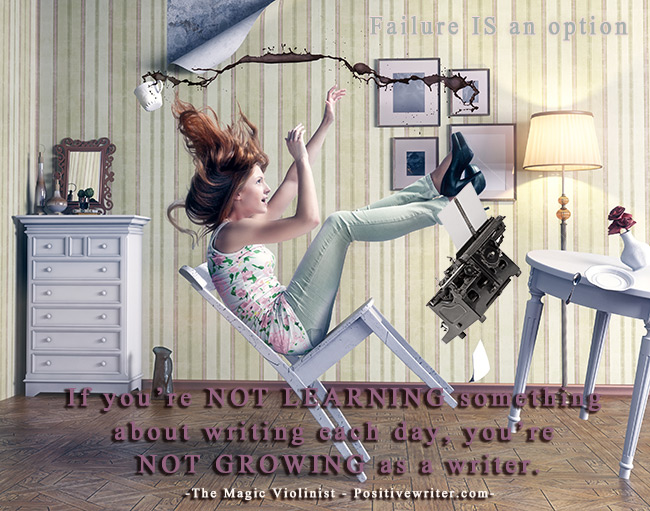
Plan to Fail, Then Move On

fail2

Or as Fannie Flagg, actress, comedienne, author, once put it: “Don’t give up before the miracle happens.”

Writing is a grueling endeavor, often without guarantee of success. But if you write, you know this already. You write with the hope that, at some point, your efforts will pay off.

As author Will Self writes: “To attempt to write seriously is always, I feel, to fail – the disjunction between my beautifully sonorous, accurate and painfully affecting mental content, and the leaden, halting sentences on the page always seems a dreadful falling short.”

Most importantly, however, Self writes:

It follows that to continue writing is to accept failure as simply a part of the experience – it’s often said that all political lives end in failure, but all writing ones begin there, endure there, and then collapse into senescent incoherence. I prize this sense of failure – embrace it even. … When anyone starts out to do something creative – especially if it seems a little unusual – they seek approval, often from those least inclined to give it. But a creative life cannot be sustained by approval, any more than it can be destroyed by criticism – you learn this as you go on. … No, this is the paradox for me: in failure alone is there any possibility of success.

You can read some fascinating thoughts on writing failure and motivation here, with insights from seven successful writers.

Margaret Atwood has inspiration for those of us who write and “fail”: “Get back on the horse that threw you, as they used to say. They also used to say: you learn as much from failure as you learn from success.”

fail


7-Step “Freytag’s Pyramid”

freytag_pyramid


Gustav Fregtag, a 19th-century German playwright, developed his 7-Step “Freytag’s Pyramid” for storytelling:

  1. EXPOSITION: the background, setting, characters, setting the scene
  2. INCITING INCIDENT: something happens to begin the action
  3. RISING ACTION: the story builds
  4. CLIMAX: the point of greatest tension
  5. FALLING ACTION: events that happen as a result of the climax
  6. RESOLUTION: the character solves the problem/conflict
  7. DENOUEMENT: French term meaning “the ending”

These are excellent guidelines for fiction writers, as well.

Before you begin writing, draw up an outline with these points. Know where you plan to go before you start writing. You can always change things along the way, but this will give you a game plan, or a road map, for where you plan to arrive.

As you outline, start out filling out each item in brief. Then, go back and begin fleshing out your ideas, always adding to these seven bullet points. Stay within these points, and your writing will remain focused, no matter how many detours you make within each point.

Within a novel, you might have several escalating points (rising actions), but only one Climax, and one Resolution.

The more you flesh out your pyramid, the easier your writing will come. You can add to or subtract from your pyramid at any time in the process, but always know at any given moment what each step contains.

Lowering the Bar in Editing?

rules

It’s the way of the publishing world, I hear. Not only for smaller publishers, but also for venerated ones.

Never mind the rules: if the author is consistent, then follow the author’s lead.

I want to scream.

I have worked so hard through the years to attain a high level of editing knowledge and expertise, in a variety of styles (Chicago, Oxford, MLA, APA, AP, etc.), and now so many of the rules of style are being ignored.

I don’t know why, but we editors are being told to “follow the author’s lead,” even if not strictly correct. I’m currently editing a book written using UK spelling, but U.S. punctuation. What the heck? Why the combination?

I’m not sure if this is a matter of convenience (most publishers don’t have a large in-house editorial staff any more), or lack of knowledge. All I know for certain is that the editors I worked with early in my freelance editing career were task masters who demanded that I know the rules of style inside and out. Today, those editors are being told by their publishers that such adherence isn’t necessary.

rules3

This wouldn’t affect me so strongly, I suspect, if I weren’t so aware of how pathetic writing skills have become, particularly in journalism. Only today I came across the line, “A person may have ran through the school slashing or puncturing students with a knife or other sharp object, according to early reports cited by The Associated Press.” 

“May have ran”? Where is this reporter’s editor? And this isn’t an isolated incident. Daily, I read news items with rampant spelling, grammar, or punctuation errors. These aren’t just symptomatic of online journalism, either. I believe that people simply don’t know the rules, and don’t care.

rules2

I’ve heard the argument that language is a living entity, and must change with the times. Baloney. Why are the rules now no longer sufficient or important? What has changed in the past few decades, besides less-knowledgeable editors and/or teachers/professors?

What gripes me is the change in long-standing rules: it is apparently okay to start a sentence with “And” now (CMOS says so; see my sentence in the paragraph above), and end any sentence a preposition with. As far as parallel construction and noun/verb agreement, well, and then who care?

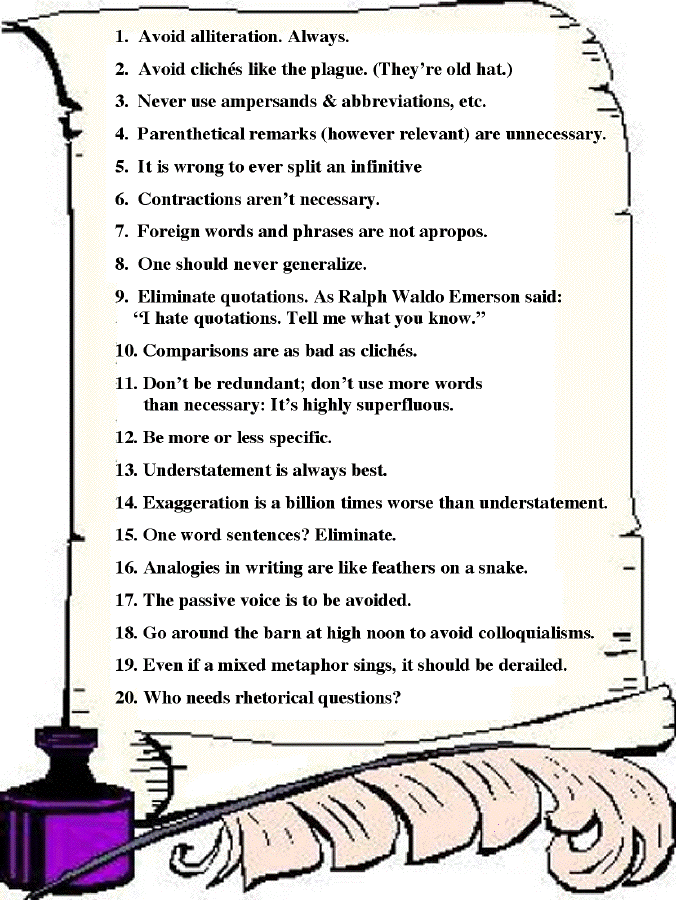
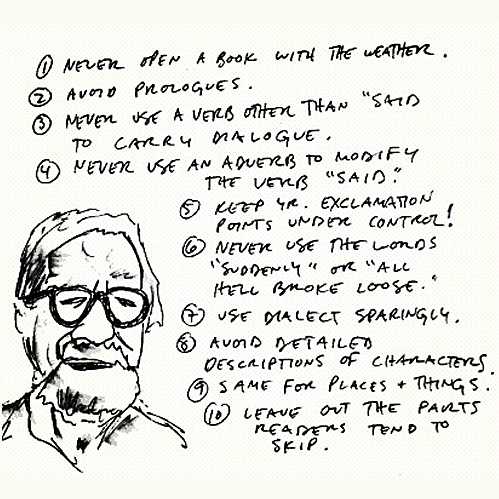
My poor friend Meg Gardiner listens to my rants on a daily basis when we IM. She’s long suffering, and regularly advises me to breathe deeply or take a long walk when my blood pressure goes up. I love writing! I admire good writing. There are guidelines for powerful writing that should be followed. (As shown here, the rules from Elmore Leonard):

rules

I’m not just being a fuddy-duddy about this. Yes, I love the rules of the language, and think English is perhaps the perfect language, with its incredible pedigree derived from other languages. But it’s more than that.

As an editor, it is becoming increasingly difficult to know what is right. It was hard enough to decide whether I was wearing my US or UK English hat, but now I have to decide whether I’m wearing my by-the-rules hat or off-the-cuff hat. It’s my job to make the reader’s experience as enjoyable as possible, by making the writing as clear as possible. This is becoming increasingly more difficult.

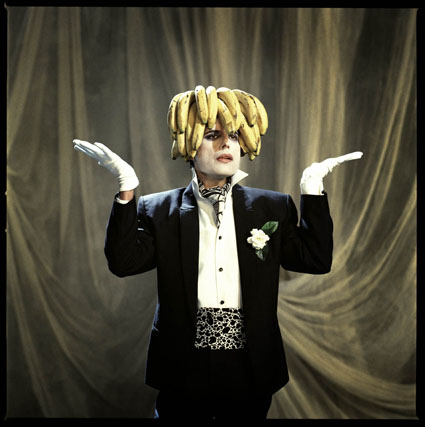
As Freddie Mercury so famously sang: I think I’m going slightly mad!

mad