Copyediting Style Sheets

I cannot emphasize enough the importance of using style sheets if you are an editor. I created style sheets for myself before I even knew they were commonplace for editors. There is simply no other way to keep track of proper spellings, names, punctuation decisions, and other items that require consistency when you are editing. Before a manuscript is sent for final proofing, most publishers will require a style sheet. You might as well be the one to create it.

For my work, I use a two-level style sheet, one with formatting, punctuation, and spelling decisions in the top portion, and with an alphabetical list of words in the bottom portion. The alphabetical list allows me to quickly find and verify the spelling of any unusual or foreign words or proper names I find in the manuscript.

In the top portion, I write whether I’m editing for UK or US English (depends on the publisher), decisions about whether and when to spell out numbers (use words for one through ten, for example, and numerals for 11 and up), whether or not to use serial commas, how to cite sources in text and bibliography, punctuation (such as how to form an ellipse), and other items that must be consistent throughout the document.

With respect to names, I suggest that, even if you think the name is easily recognized, you write down the spelling, since authors sometimes change spellings in midstream. And always verify names against the bibliography, if one is included. (If there is a discrepancy, check Google to verify the author’s name.)  I alphabetize by first name, last name (i.e., Richard Johanson) rather than by reverse order (i.e., Johanson, Richard), as you’d find the name in the Index.

Speaking of indexes, the style sheet is also an aid when you are creating an index, since you already have many of the topics and names listed. Using the style sheet, you can search for terms in the manuscript and record the page numbers (in a PDF file, prior to print).

Of course, initially, keeping a style sheet as you edit adds time to your endeavor, but in the long run, it saves time, so you don’t have to keep flipping back through the pages to verify how something is spelled. This is especially helpful with history books or books about foreign topics, where names are vital.

I strongly recommend that you create a style sheet for yourself and your client when you are editing a manuscript. Most publishers require one, and it’s a nice little bonus to give to your clients before they ask for it. Once you get the hang of using them, you’ll wonder how you ever did without them.
Great Ideas, Poor Execution

About a month ago I wrote about SyFy’s new show “Alphas,” thrilled with the idea of the characters and eager to see what the writers did with the show. Now, two months or so into the season, I’m still waiting for the writers and directors to do justice to what they’ve created. They have this unique idea about a group of “common folks” with uncommon abilities, and they’re turning the show into a retread of “Heroes,” and a weak retread at that.

I sat and analyzed why it was so weak and decided it was because the writers just don’t know what to do with the characters they’ve created. The character who can influence people’s minds? She’s just an enforcer, who steps in when violence isn’t desired or necessary to get a confession or information. The empath? Well, she’s a little more useful, though she often seems more like a bloodhound than an empath. The former FBI agent who goes ballistic on command? Seems like he fails in his goals more often than he succeeds. The character with pinpoint aim? Certainly, he can throw a textbook and trip a running goon, but what else is he capable of doing? So much more! The character who reads/sees digital information is the most enjoyable, and yet they could do much more with him than have him track cell phone signals or read Google maps in the ether. And, finally, the fellow who has brought them all together…he caved so suddenly when the government wanted them to become “super agents” that he no longer has any credibility. What was the initial reason for gathering the Alphas? Does anyone remember?

Another show that had great promise but has withered on the vine is “Leverage,” about a group of con artists and thieves who help those who can’t help themselves, standing against all odds for the Little Guy. Unfortunately, Timothy Hutton is incapable of headlining the team with any strength of character; he’s the weakest link in the group of six. That’s likely due to his acting limitations, rather than to the writing, but the storylines have grown increasingly absurd and uninteresting. The season’s opener involving a mountain climbing expedition was laughably horrible. The Brits were able to keep the audience’s interest in the original series, but here in the U.S., the potential has fizzled.

Such a disappointment to see how these characters in both shows are going to waste. They have such potential for new storylines, but instead seem simply to be retelling stories from other shows using different characters.

The same goes for the second book in the Cleaner series by Brett Battles. In the first book, The Cleaner, Battles introduces us to an interesting character unlike any I’ve encountered before. The Cleaner sanitizes scenes where government/CIA/Office interactions have gone bad, removing bodies and covering any tracks of what took place. An intriguing idea, and I looked forward to reading more  books. The second book, The Deceiver, is so slow-moving that I found it hard to read until the end (though the last 50 pages finally picked up the pace). And in the second and third books, the Cleaner is no longer cleaning, but is involved in international intrigue on his own. We already have those characters and those stories.

Not that these books aren’t decent reads, but I get the sense that Battles has lost sight of the character he created, a new character with great potential for new stories. It’s sad to see a writer (or series writers) create something new and let the characters lie fallow, instead taking the easy/safe/tried-and-true path that has worked for other authors and writers.

I’ll keep watching “Alphas” for a few more episodes, though I’m almost certain I’m finished with “Leverage,” and haven’t decided on the Battles books.

The moral of the story is, it accomplishes nothing if you create great characters and let them go fallow in weak stories. Do justice to your characters and give them vehicles in which they can thrive.

Books from Childhood

I’ve been a voracious reader since childhood (if we discount the years from third to fifth grade when I thought books were boring and would much rather have been out playing baseball and tennis than sit and read). From an early age, I would sit in my parents’ laps and listen to stories, or lie on the floor by myself, looking at the pictures in the books and telling myself the stories. (This latter habit led me to strongly dislike that fellow Abraham for several years, until I learned that he never killed his son whom he had laid upon an altar of stone.)

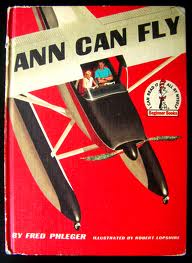
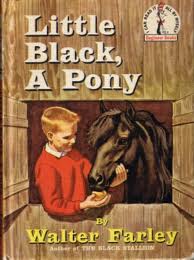
My parents read to my brothers and me as often as we asked and they had the time. But then, once I learned to read, the world opened up to me. This morning, I was looking at my bookshelf and saw some of my childhood favorites, a couple of which I’ve had since childhood, the others which I bought on eBay: Ann Can Fly; Little Black, A Pony; Look Out for Pirates; The Whales Go By. I’ll still read these books today, simply to immerse myself in memories, and the feeling of pride I had as I learned to read each one all by myself.

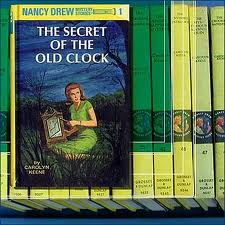
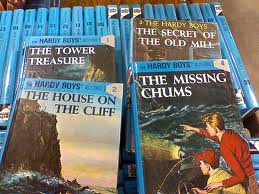
My childhood was replete with sports, activities with my brothers and friends, and travel — but some of my fondest memories focus on the books of my youth. Once I’d passed beyond the Dr. Seuss books, I soon discovered Nancy Drew, and then the Hardy Boys. Not a huge fan of the Bobsey Twins, but I loved the Railroad Children. And how many standalone books did I devour, time and again, haunting the juvenile fiction shelves in our local libraries?


This post isn’t simply a trip down Memory Lane, but a reflection on how books helped influence who I am today, what I do, what I love, what I teach my children, what I seek as comfort, and where I draw from for hope and enlightenment.


Today, I continue to read “juvenile” fiction: the entire Harry Potter series, the recent Hunger Games series, The Chronicles of Narnia, and so many more. Fiction books abound, and I’ll never read as much as I want to, but my desire to read was launched when I was a little girl. Really, what better gift can you give a child than a book? If you don’t know what books to give or recommend, I’d suggest looking for the Caldicott Award Winners. Or, look into your memory. What books did you enjoy as a child?

Music for Writing and Editing

I frequently get recommendations for new music to listen to from my son and daughter; they know what I like, and often find new groups, or groups I’ve never heard of, for me to try. One of my current favorites is Mumford and Sons. Another is Aqualung.

But I find that I can’t listen to their music, or any others where lyrics are featured, when I am editing. No matter how hard I try, I cannot keep the words of the songs from registering on my mind, and interfering with the task at hand–that is, editing other people’s words. For editing, my choice is classical music, preferably symphonic. I’m not a lover of classical piano music or violin features, but give me the full symphonic sound and I can happily edit for hours. Sometimes, if I’m in a specific mood, I’ll choose specific composers (Vivaldi, or Moussorgsky, or Wagner, or Telleman, or Mozart). Other times, I leave the selection to Pandora, willingly accepting most of what I am offered.

On the other hand, if I am writing fiction, I often choose music with words, especially if I am trying to feed a certain emotion, or build an environment for myself in which to write. Oddly, I think most people would say, I find that music from the Civil War is great for eliciting emotions of various kinds. I also like Edith Piaf, for other emotions. And Marian Anderson, Paul Robeson, and Mahalia Jackson are great for  depth, as they plumb the soul.

I can’t listen to music constantly throughout the day; my ears simply get tired and it all becomes just noise. But I know when I need to feed my mind, my spirit, my emotions…or simply get carried away as I edit, lifting my mind off the page and into that realm where I work without effort or noticing the passage of time.

The Dark Ages: Before Google

What did writers (and editors) do before Google? I am constantly looking up information on Google as I edit academic books, verifying the spelling of names, dates, events, and any number of items which I, as editor, must ascertain are correct.

And I can do so by simply typing in the Google search box. Question on the Kosovo conflict? Thousands of hits at my fingertips. Uncertain about how Kafka viewed the unconscious, more hits. Need the names of the Secretaries-General of the United Nations? Voilá. And what is the difference between a barque and a junk? No problem, and here are photos to clarify further.

How did editors do this before now? Did they spend all of their time in academic libraries, scanning volumes and journals? I simply don’t know. Perhaps there were fact verifiers in addition to copyeditors, whose job it was to check this sort of information. I’ll have to ask someone who’s been in this business longer than I have. Meanwhile, it falls to me to check, and so I do. With gusto, and with the sense that I learn something with every mini-hunt I pursue. With each search, I push my own personal Dark Ages a bit further behind me, opening the doors to Enlightenment.

I feel my knowledge increasing on a daily basis, as I learn multitudes of new facts while scanning the Internet. As a friend said, I’m pursuing a PhD in Everythingology in my current career. And it’s all free (barring the Internet fee I pay to my provider). May it ever remain so!

Use the Story Elements

Yesterday, while in the mood for mindless entertainment, I watched a movie called Ice Road Terror, about two ice road truckers (and the obligatory female scientist who is riding with them) who are terrorized by a giant lizard-like creature who had been released from the bowels of the earth by demolition at a diamond mine. The two truckers have been sent to take more explosives to the diamond mine. (Apparently, it takes two trucks to take one load, but I won’t quibble.) As the truckers are en route, the monster (who is a creature from Inuit mythology) has begun feasting on the workers at the diamond mine. When the truckers and scientist arrive, the creature turns to them for a new taste treat. They run away, in the trucks, but are pursued by the creature, who can travel underground and through ice at 45 mph.

At the moment we see them being pursued, we already know the following: at least one of the trucks is filled with explosives. The ice roads have started to melt. There is a truck stop not too far away.

Back to the story. Turns out the monster has hitched a ride on top of one of the trucks. The driver skids and tosses the monster to the side of the road. Meanwhile, the explosives (which were never tied down properly in the truck) have shifted and somehow ignited, and a fire has begun in the back of a truck. The driver and the passenger hop into the other truck, and we never see what happens to the truck on fire.

The monster then pursues the second truck, turns chicken when it drives straight at it and the hole in the road, and then attacks when the drivers try to detach the trailer (killing the foreman of the mine, who had escaped from the camp with them). Now they have to hike through miles of snow to get to the truck stop, where we see the owners trying to free their SUV from the snow. Ultimately, there is more carnage (they’ve been unable to radio for help because the Aurora Borealis is interfering with the signal) and the survivors decide to lure the monster into the house, which they intend to have set on fire, creating heat and smoke (the creature sees in thermal light and they plan to blind it with smoke). It’s a good plan: the creature will be stuck in the burning house and they can escape in the stuck SUV. The owners of the truck stop had been killed, and before she died, the wife asked that their house be made their coffin.

Next scene, two people are feeding tiny pieces of kindling into a Franklin stove; I guess that was the fire they had planned to set. Apparently, the monster thought they were ready for it, and came crashing into the building, where there was no major conflagration, or smoke, and kills one of the drivers (poor Neal). The two remaining survivors try to escape in the still-stuck SUV, then run down the road, chased by the lizard. Fortunately, there is a fuel pump directly in front of them, and the scientist just happens to be carrying a flint, and they light the gasoline while spraying it on the creature, who stands there and lets them ignite it. Creature dies, the new couple embrace, and a helicopter flies to the rescue. (And the house is still standing…will it be their coffin, or not?)

Dynamic story, right? But oh so wrong from a writing standpoint. There were some great elements in the story: the explosives, the melting ice road, a scientist along for the ride, Inuits and mythology, and a log cabin that could hold the monster while it burned around the creature. And yet, none of those elements were used to any purpose in the story. What a waste. Instead, the characters “happen” to see a generator on the porch, “happen” to have a handy fuel pump and flint…and where did the helicopter come from, if the radio hadn’t worked?

As a writer, if you are going to put elements into your story, you must use them. And you must have those elements in place before they are needed. Rather than just have the fuel pump have appeared out of nowhere, it would have been better to have had the couple filling their SUV when the monster attacked. At least then, the pump would be in our minds. Same with the flint. We never saw it before the scientist suddenly had it in her pocket. And, my goodness, what about the explosives? How much better to have blown up the creature! And what about the melting ice roads? They were a problem on the way to the camp, but not during the chase with the lizard?

Granted, I watched the movie to the finish…even knowing how it would end and who would survive, but it was more because I couldn’t believe they weren’t using their fabulous elements than because I wanted to see how it was resolved. Ultimately, I simply shook my head. Such a waste. Someone simply didn’t know the basics of storytelling.

Put Away the Phone and People Watch

I’m headed for the airport in a couple of hours and am looking forward to the wait for my plane. Well, okay, that’s a bit of a stretch. Let’s just say that I will put that time to good use, by people watching.

As a writer, you must make time to people watch, to observe the pantheon of characters within your orbit, wherever you are. Keep a notebook handy and jot down little notes about the folks who drift past you on the tide of humanity. (If you don’t write these down, at least store them in your long-term memory until you have the chance to record them.)

Note clothing, postures, relationships, unspoken communication, facial expressions, accents, attitudes — all of which are elements to put into your characterization tool box. How do young lovers stand, walk, or sit by each other? How do middle-aged couples do the same? And the elderly? What do you see in the elderly that is also in the young couple in love? Why might those elements have lasted into old age? What do they tell you about the people, the relationships, the quality of love?

How do you get a sense of personality or mood from a person’s posture or gait? What assessment do you make of a woman who wears a lot of makeup? of a woman who wears little or none? Of a man who plucks his eyebrows? Now, think. WHY do you make those assessments? Write down your answer.

Listen for accents or turns of phrase, but be aware that writing in an accent is a challenge, both to the writer and to the reader. What you want is a “taste” of the accent, a saying or phrase that gives you the sense of “Other,” of foreignness or dialect.

My favorite are the eyes. I like to watch how people use their eyes, and what their eyes say about them. Wide open, half-cocked, drowsy, side-darting — all of these can say something about the person, beyond just physiognomy.

So, put away your phone, your iPad, and your other electronic devices and people watch. It’s what will make your fiction come alive!