Today, there are so many people–politicians, actors, athletes, university presidents, etc.–who stand before their audiences and pontificate on whatever subject is near and dear to them. So many times, my eyes just glaze over as I try to listen, generally because they beat an idea to death, and use too many words to do it. It’s not simply a matter of telling your audience what you’re going to say, saying it, and then telling them what you said. That is painful enough, but they also have to repeat the ideas from several view points, just in case you missed it the first time.
Then I read some of the great speeches of the past. George Washington’s Farewell Address of 1796 comes to mind, an excerpt of which I quote:
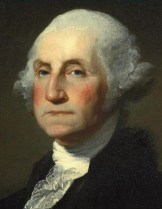
“I have already intimated to you the danger of parties in the State, with particular reference to the founding of them on geographical discriminations. Let me now take a more comprehensive view, and warn you in the most solemn manner against the baneful effects of the spirit of party generally.
“This spirit, unfortunately, is inseparable from our nature, having its root in the strongest passions of the human mind. It exists under different shapes in all governments, more or less stifled, controlled, or repressed; but, in those of the popular form, it is seen in its greatest rankness, and is truly their worst enemy.
“The alternate domination of one faction over another, sharpened by the spirit of revenge, natural to party dissension, which in different ages and countries has perpetrated the most horrid enormities, is itself a frightful despotism. But this leads at length to a more formal and permanent despotism. The disorders and miseries which result gradually incline the minds of men to seek security and repose in the absolute power of an individual; and sooner or later the chief of some prevailing faction, more able or more fortunate than his competitors, turns this disposition to the purposes of his own elevation, on the ruins of public liberty.
“Without looking forward to an extremity of this kind (which nevertheless ought not to be entirely out of sight), the common and continual mischiefs of the spirit of party are sufficient to make it the interest and duty of a wise people to discourage and restrain it.”
Are we not living today this very conflict of which Washington spoke? And how succinct was his warning. What politician or pundit today could be so powerful, so forceful, in so few words?
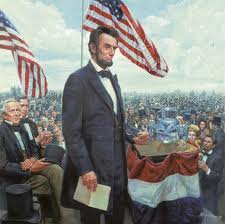
And then we have Abraham Lincoln, who wrote almost in sound bites, his wisdom thus easily recalled, as in the Gettysburg Address:
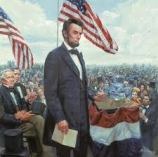
“Four score and seven years ago our fathers brought forth on this continent, a new nation, conceived in Liberty, and dedicated to the proposition that all men are created equal.
“Now we are engaged in a great civil war, testing whether that nation, or any nation so conceived and so dedicated, can long endure. We are met on a great battle-field of that war. We have come to dedicate a portion of that field, as a final resting place for those who here gave their lives that that nation might live. It is altogether fitting and proper that we should do this.”
Or Mohandas Gandhi, speaking of Christianity: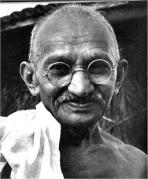
“A man who was completely innocent, offered himself as a sacrifice for the good of others, including his enemies, and became the ransom of the world. It was a perfect act.”
Who do you know today who speaks with such clarity and simplicity?
I have been editing two books recently, one a work of fiction and the other of non-fiction. Worlds apart in subject and in writing style. The fiction book would be better as a screenplay, since the novelist writes dialogue better than he writes narrative. But both are blessedly brief. He doesn’t overwrite (except when he uses a thesaurus instead of his own vocabulary, which then brings the author into the story…which is a major blunder).
The non-fiction writer is writing a theology book, and with each sentence was attempting to address every possible argument that sentence. It was extremely draining to try to read. I understood his reasons, but was able to convince him that his sentences were too dense, that if he ever hopes to have the tome read completely, he had to lighten the load of every sentence. Taking my advice, he edited and pared, and the result has been striking. His insights leap off of the page now, freed from the burden of unnecessary words.
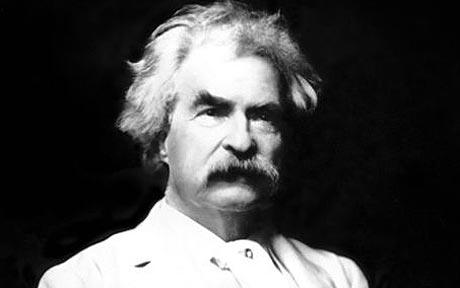
As you write, read. Read literature and famous speeches, and notice how the authors have made their language work for them. As Mark Twain said, write as though you must pay for the words you use. A typical Twain thought, carved to the bone and yet full-figured:
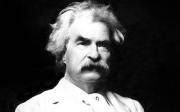
“Anger is an acid that can to more harm to the vessel in which it is stored than to anything on which it is poured.”


 The Writing Itch

You must be logged in to post a comment.