Geoffrey Chaucer Hath a Blog

Who knew! Or rather, who kneweth that the greate Chaucer hath himselfe written a blog?
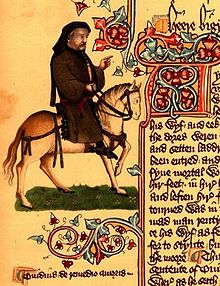
I came across this website by accident yesterday and spent longer than I had anticipated trawling through it: http://houseoffame.blogspot.com/

The blog site includes several timely blogs, as well as links to pertinent information about Chaucer. But it’s the blogs that I particularly enjoyed, such as this one, “Aye, Virginia, ther ys a Robin Hood” (excerpt from http://houseoffame.blogspot.com/2010/06/aye-virginia-ther-ys-robin-hood.html):

“Deere Mayster Chaucer,

“Ich am but VIII yeeres of age. Sum of my litel freendes seyen that ther ys no Robin Hood. Ywis, thei do saye that ther is no historical record of him. My fadir sayeth that “yif ye see yt on a blog then it ys trewe.” Plese speke the treweth to me on yower blog: is ther a Robin Hood?

-Virginia

“Virginia, yower litel freendes aren yn the grip of grete errour. Thei have been bismotered by the over-reliaunce on documentz of a tyme that ys excessifly concerned wyth historical record. Thei yive credence unto no thyng but yif thei see yt in a roll or chartir or heare a twentye minute talke yn a small room wyth questionez aftirwardes. Thei thynk that no thyng can be or hath been save for thos thinges that kan be compassid in their croniclez. Yet all croniclez, whedir thei be of thos folk at gret researche universitees or thos term papirs that childer do wryte, are litel. In the grete duracioun of eternitee, the tyme of man ys but that of a pissemyre, whanne comparisoun ys made bitwene yt and the lastingnesse of the worlde. For as wyse Boece saith of erthely fame: “yif thou wolde make comparisoun to the endles spaces of eternyte, what thyng hastow by whiche thou mayest rejoisen thee of long lastynge of thy name?” (LIBER II PROSA VII).”

And the “Serpentes on a Shippe” blog is worth reading, as well.

Go ahead, get your Chaucer on! And be sure to check out his About Me page! Fun stuff.

Upheaval

How many synonyms are there for the word “upheaval”? Let’s see. Off the top of my head, I know: upset, unrest, mayhem, catalyst, disorder, chaos. Then there are:  disruption, disturbance, trouble, confusion, turmoil, pandemonium, cataclysm, shakeup, debacle, revolution, change, and craziness.

The last one suits me best now, as our lives are upheaved during this time of change, as we move from San Diego to DC and then on to Brazil. This is a shakeup of epic proportions, already incorporating a sense of unrest, disorder, and pandemonium. Not quite a debacle, because I think we have things slightly under control, but with any further disruption or disturbance, I’m sure chaos will ensue.

Meanwhile, I will not be writing on this post for a week or so, as I have to unplug and box my life.

Until then, I’ll try to avoid the confusion that comes with upheaval, and walk placidly among the change.


Portuguese to Expand My Vocabulary

So now that I will soon be moving to Sao Paulo, Brazil, I have to learn Portuguese. I already speak French, know some German, and understand Spanish, but I hear that Portuguese is a whole new kettle of fish.

I’m looking forward to learning it, though, because each language I learn increases my English vocabulary, since English is a compilation of Romance languages, Latin languages, and a whole collection of words from other languages. Plus, as I learn Portuguese, I’ll learn new ways to phrase and describe things, rather than simply translating English into Portuguese. Transliteration doesn’t always work, as JFK found out while standing at the Berlin Wall, stating in German, “Ich bin ein Berliner.” What he meant was, I am a citizen of Berlin, but what he said was, I am an eclair. Or my father, when he once stated, “Je suis embarrasse,” to a roomful of nuns, who laughed behind their hands in silent hilarity. What he meant was, he was embarrassed. What he said was, he was pregnant.

So, it’ll do me good to learn a new language, both to apprehend what people in Brazil are saying to me, but also to expand my English vocabulary and descriptions. As I study, I’ll be sure to write some fun tidbits here. So keep an eye out!

Books from Childhood

I’ve been a voracious reader since childhood (if we discount the years from third to fifth grade when I thought books were boring and would much rather have been out playing baseball and tennis than sit and read). From an early age, I would sit in my parents’ laps and listen to stories, or lie on the floor by myself, looking at the pictures in the books and telling myself the stories. (This latter habit led me to strongly dislike that fellow Abraham for several years, until I learned that he never killed his son whom he had laid upon an altar of stone.)

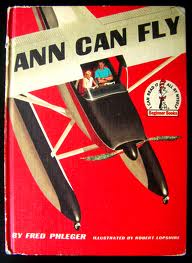
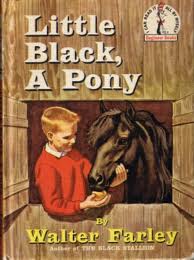
My parents read to my brothers and me as often as we asked and they had the time. But then, once I learned to read, the world opened up to me. This morning, I was looking at my bookshelf and saw some of my childhood favorites, a couple of which I’ve had since childhood, the others which I bought on eBay: Ann Can Fly; Little Black, A Pony; Look Out for Pirates; The Whales Go By. I’ll still read these books today, simply to immerse myself in memories, and the feeling of pride I had as I learned to read each one all by myself.

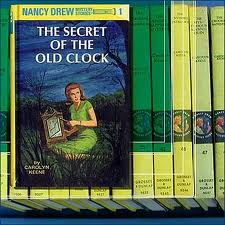
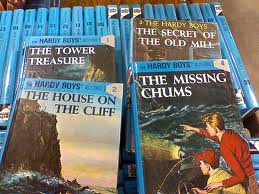
My childhood was replete with sports, activities with my brothers and friends, and travel — but some of my fondest memories focus on the books of my youth. Once I’d passed beyond the Dr. Seuss books, I soon discovered Nancy Drew, and then the Hardy Boys. Not a huge fan of the Bobsey Twins, but I loved the Railroad Children. And how many standalone books did I devour, time and again, haunting the juvenile fiction shelves in our local libraries?


This post isn’t simply a trip down Memory Lane, but a reflection on how books helped influence who I am today, what I do, what I love, what I teach my children, what I seek as comfort, and where I draw from for hope and enlightenment.


Today, I continue to read “juvenile” fiction: the entire Harry Potter series, the recent Hunger Games series, The Chronicles of Narnia, and so many more. Fiction books abound, and I’ll never read as much as I want to, but my desire to read was launched when I was a little girl. Really, what better gift can you give a child than a book? If you don’t know what books to give or recommend, I’d suggest looking for the Caldicott Award Winners. Or, look into your memory. What books did you enjoy as a child?

Colin Firth and Honesty

Last night, I watched “A Single Man,” starring Colin Firth, Julianne Moore, and Nicholas Hoult. I had no idea what the movie was about, but enjoyed it for what it was. Simple story, really. A man loses his partner of sixteen years, and decides that his life isn’t worth living. Then the people in his life show him otherwise.

Nothing super-dramatic; in fact, incredibly nuanced. I was intrigued by the director and cinematographer’s use of color tones and hues in the movie, as subtle devices to show the mindset of the main character (George). But what truly brought the movie to life was Colin Firth, whose portrayal of George, while understated, was absolutely honest. Firth outdid Firth on understatement in this movie. It was the eyes first. From the moment he receives the call about Jim’s death, when he sits stunned, and his eyes slowly fill with tears, Firth had me hooked. Tears in his eyes, with only spasms of grief twitching across his face, he  walks robotically around his house, before running to a friend’s house, where his despair and loss pour out. It was all so carefully underplayed. So honest.

From that point on, it didn’t matter what the storyline was, I believed Firth. And, most importantly, I cared about George.

In writing, as in acting, it is vital to make your characters believable. Once you accomplish that, and adhere to the straight and narrow road of honesty with your characters, your book will succeed. You will pull your reader into your writing and make them care what happens to your characters, good and evil though they may be. Once you’ve defined a character, you must be honest with both that character and the reader. Otherwise, your writing will fail.

You cannot create a character who acts like Gandhi in one scene, and then turns and  destroys a town in another. The only way that works (and I think it would make a great character), is if you write it so that others see the character as a Gandhi, but you, as the writer, give the reader the tiniest glimpse of the monster who lurks within. In that way, you have been true to the character and, thus, to the reader. But, thereafter, the reader will know the monster, and the character must abide by that truth. It won’t work if you have the character have a change of heart for a happy ending. Remember in “The Wizard of Oz,” the Wicked Witch of the West dies. There is no miraculous transformation as a result of her interaction with the purity of Dorothy and her friends (especially Toto). No, that could never be. She was evil, and evil she would remain until her death.

So it is with your characters. Once you have defined them, so they must remain. Of course, there is some character transformation that can take place, growth and change through atonement, for example, but the seeds of that growth and change must already lurk beneath the surface, and must have already been infinitesimally visible to the reader. In that way, you stay true to your characters, and honest with the readers.

Before you begin writing, know your characters, inside and out. And look for those little hints, the tiniest suggestions, of possible growth and change. These tidbits can surprise you as a writer, and delight your readers.

Harry Potter: The End of an Era

I will finally get to see “Harry Potter and the Deathly Hallows, Part 2” this week. The show has been sold out in my town since it opened. I was hoping to reread the last part of the book before I saw the movie, but I don’t know whether I’ll have the time. I want to see the movie, NOW.

But part of me is reluctant to go see the eighth and final film, just as I was reluctant to read the final book; I don’t want the era to end.

What JK Rowling accomplished with Harry Potter simply astounds me. She created a worldwide phenomenon. There must be few of the 193 nations on earth where the name Harry Potter is unknown, thanks especially to the remarkable movies that were made from the enchanting books. Had the movie franchise not been so successful, Rowling’s achievement might have gone less global. But Chris Columbus launched the movies with his excellent crew, with notable designers who had clear visions of what the world of Harry Potter should look like. And the result, MAGIC!

I still wonder how Rowling came up with an idea that so captured the imagination of the world. Other stories of magic have been written, but somehow she found just the right combination of characters and fashioned an astonishing story arc that carried her readers through eight very lengthy (for the most part) tomes. Her stories were fantasy, but the appeal came from the truth that ran like life’s blood through the stories. Readers could identify with the struggles of Harry and Hermione and Ron and the others. Their troubles may have taken place in a magical school that doesn’t exist, but their fears, hopes, dreams, and desires are firmly rooted in our world. Rowling simply transported us to a parallel universe, and we went willingly along: intrigued, enchanted, and smitten.

But now, the movies have been completed and released, and the final book had an epilogue. It is finished. After  fourteen years, the ride is over.

And I’m one melancholy Harry Potter fan. What can we look forward to now? Who has the next idea waiting to take the world by storm? I wrack my brain, but I’ve got nothing, not on that scale, anyway. But that’s the fun of the challenge: what stories enchant, and how can they be remastered for today’s new readers? What new era is about to begin?

In an Elevator

So the question is, who is the last person on earth that I would want to be stuck with in an elevator, and why?

While several specific people come to mind,  she of the bathing suit at the Y, for one, I will instead write about a type of person, rather than a specific one.

I would abhor being stuck in an elevator with someone who doesn’t read. Not quite as bad, but still bad, is someone who only reads self-help books. But mostly, I would find it difficult to spend time with anyone who doesn’t read to expand their horizons.

I know that there are those people who don’t read fiction, not wanting to waste their time on anything that “isn’t real,” while there are others who read only fiction, not wanting to waste their time on biographies or history. But give me a person who reads, and I’m sure to find something to talk about with that person. Even if it isn’t something about which I am particularly interested, I know I will learn something in the time we speak. Recently, at jury duty, I made a point to try to meet the other eleven people in the jury. I spoke with a recent college graduate who answered my queries  shyly at first, and then with greater animation, as he told me of his desire to go into speech therapy analysis and the reading he has been doing on the subject; an older gentleman who had been with the CIA before becoming a master chef in New York, before becoming a dealer in fine jewels, selling to the original founders of the great jewelry stores such as Tiffany’s; a woman who is a “WWII orphan,” one among several hundred thousand of such children who lost their fathers in the Second World War, and who now writes about the research being done to link these orphans with the stories of their fathers’ war experiences; and  a man whose hero was Sandy Koufax, and who knew every detail about Koufax’s life; and several others.

The point is, I found something to speak about with each of these people because they  were interested in life beyond their own noses, and each turned out to be a voracious reader. Once we found we had that in common, the rest was a walk in the park. They knew about the world beyond their limited experience and they sought to know more through books.

I have neighbors who do not read. While they are nice people, I find I have little to speak about with them. They have opinions set in stone, circumscribed views on the world around them, and no interest in the lives of others who differ from them. They are like a cousin of mine who proudly declares, “Europe has nothing to offer me. Why would I ever travel there?”