How to Describe a Character

One of my pet peeves is authors taking the easy way out when describing a character.

Dan Brown makes me grind my teeth every time he describes a character. He’s a master storyteller, but I wouldn’t call him a great writer. Here’s one of his descriptions of Robert Landon, the main character in Angels and Demons (parenthetical comments are mine):

“Although not overly handsome in a classical sense, the forty-year-old Langdon had what his female colleagues referred to as an “erudite” appeal (whose quote? When did he ever hear that, when did ANYONE ever say that?)—wisps of gray in his thick brown hair, probing blue eyes, an arrestingly deep voice, and the strong, carefree smile of a collegiate athlete. A varsity diver in prep school and college, Langdon still had the body of a swimmer; a toned, six-foot physique that he vigilantly maintained with fifty laps a day in the university pool.”

Argh! How was this trip ever published? He goes on:

“Langdon’s friends had always viewed him as a bit of an enigma—a man caught between centuries. On weekends, he could be seen lounging on the quad in blue jeans, discussing computer graphics or religious history with students (of course he would! He’s so cool and hip and trendy!); other times he could be spotted in his (wait for it) Harris tweed and paisley vest (gag!), photographed in the pages of upscale art magazines at museum openings where he had been asked to lecture.”

By this point, I’m tearing out my hair. But there’s more:

“Although a good teacher and strict disciplinarian (of course), Langdon was the first to embrace what he hailed as the “lost art of good clean fun.” (Again, whose quotes and when was it ever said? If not, why the quotes?) He relished recreation with an infectious fanaticism that had earned him a fraternal acceptance among his students (in reality, they would have mocked him for trying, at 40, to be one of them.) His campus nickname—“The Dolphin”—was a reference both to his affable nature and his legendary ability to dive into a pool and outmaneuver the entire opposing squad in a water polo match. (Baloney!)

Those three paragraphs would work for an author’s notes about a character, but they never should have made it to the page in that way. First, because it’s dreadful writing, and second, because it is the author intruding into the story in order to describe the character. Otherwise, who else is giving that description?

Poor writers think it’s necessary to describe characters immediately upon first introduction. “Clive walked into the bar, wearing a dashing turtleneck, flannel slacks, and a woolen blazer. His dark hair was carefully parted, but tousled at the sides, a sign that, while he cut a dashing figure, he didn’t really care about appearances. He scrutinized the crowded bar, his piercing eyes searching for the beauty he planned to conquer that evening. He spied her at the teak-and-brass bar and sauntered over, his thin, athletic body weaving among other guests, oblivious to his own sexual appeal.”

Yes, you can retch. I’m recalling a scene from the Modern Family TV show, and writing a description. A purposefully awful description. True, we know what he looks like, and a bit about how he moves in his world, but the writing is pedestrian. It has no flair, and once again the author is intruding into the story.

On the other end of the spectrum, this is how a master describes a character:

“Sister Rolfe saw that the detective had just come in and taken up his tray at the end of the line. She watched the tall figure, disregarded by the chattering queues of nurses, as he began to move slowly down the line between a white-coated houseman and a pupil midwife, helping himself to roll and butter, waiting for the girl to hand out his choice of main course…. Her eyes followed him as he reached the end of the line, handed over his meal ticket and turned to look for a vacant seat. He seemed utterly at ease and almost oblivious of the alien world around him. She thought that we was probably a man who could never imagine himself at a disadvantage in any company since he was secure in his private world, possessed of that core of inner self-esteem which is the basis of happiness…. Probably he would be thought handsome by most women, with that lean bony face, at once arrogant and sensitive.”

That’s PD James in Shroud for a Nightingale, having one character observe the main character, Detective Adam Dalgliesh. I’ve gone through PD James’s Dalgliesh books and have underlined everywhere she describes him, and I was amazed at the paucity of instances where she has done so. Yet he is so vivid in my mind! Physically and psychologically, I feel I know what he looks like and who he is. Any description of him is from afar, from another character, never something he thinks about himself. It’s description, with judgment, given by another character. That’s why it works.

Michael Chabon, in The Yiddish Policeman’s Union, has numerous excellent character descriptions. Here’s one:

“Menashe Shpringer, the criminalist working the graveyard shift, blows into the lobby in a black coat and fur hat, with a rattling of rain. In one hand Shpringer carries a dripping umbrella. With the other he tows a chrome caddy to which his black vinyl toolbox and a plastic bin, with holes for handles, are strapped with bungee cord. Shpringer is a fireplug, his bowed legs and simian arms affixed to his neck without apparent benefit of shoulders. His face is mostly jowl and his ridged forehead looks like one of those domed beehives you see representing Industry in medieval woodcuts.”

Ask yourself, why does this work? How does it differ from the Dan Brown examples?

Descriptions don’t have to be long and detailed. Simple line-drawings work, as well, as in this character description also by PD James in Shroud for a Nightingale:

“The door opened, letting in a shaft of light from the passage. Miss Angela Burrows jerked back the curtains, surveyed the black January sky and the rain-spattered window and jerked them together again. ‘It’s raining,’ she said with the gloomy relish of one who has prophesied rain and cannot be held responsible for the ignoring of her warning.”

I know instantly that Miss Angela Burrows would not be my first choice for a holiday companion.

As you read, study how various authors introduce and describe their characters. Notice the pacing of those descriptions in the book, when and where and how they occur. Learn from the masters how to do it artfully.

MobyDick

I’ll end with one of my favorite, by Herman Melville in Moby Dick:

“Call me Ishmael. Some years ago—never mind how long precisely—having little or no money in my purse, and nothing particular to interest me on shore, I thought I would sail about a little and see the watery part of the world. It is a way I have of driving off the spleen and regulating the circulation. Whenever I find myself growing grim about the mouth; whenever it is a damp, drizzly November in my soul; whenever I find myself involuntarily pausing before coffin warehouses, and bringing up the rear of every funeral I meet; and especially whenever my hypos get such an upper hand of me, that it requires a strong moral principle to prevent me from deliberately stepping into the street, and methodically knocking people’s hats off—then, I account it high time to get to sea as soon as I can. This is my substitute for pistol and ball. With a philosophical flourish Cato throws himself upon his sword; I quietly take to the ship. There is nothing surprising in this. If they but knew it, almost all men in their degree, some time or other, cherish very nearly the same feelings towards the ocean with me.”
Editor or Writer?

I’m torn these days. I desperately want to get back to my writing, but I must edit for a living. As an editor, I work with writers to help them fashion the best story or book possible. I read their work and see the magic, and the weaknesses. This is how I make ends meet. Born without a silver spoon, I must earn my living.

But as I work, I wonder. What is my writing like these days? Do I write as powerfully and succinctly as I suggest others write? Am I still capable of telling a compelling story? Do I have a voice that will seduce?

My creative juices are banked to overflowing. How I’d love to have the chance to stop my editing and my writing coaching and concentrate on my own writing. I delight in my job, but I’d love the chance to put earning aside and just live in my imagination for a year.

I know. That’s what all aspiring writers say. Real writers simply do it. So, am I a real writer, or only aspiring (after all these years)?

Tom has a friend who just self-published his first book on Amazon. The first in a series he is writing. My former boss, Cy, also self-published his first book (and I am thrilled that he has). I am helping to prepare a book for Via Lucis Press, which will require writing creativity as well as editing on my part. But it’s not “my” book.

My first novel attempt is a no-go. I’ve waited too long to finish it, and the world has moved past, technology has made the story obsolete, and I simply think it’s time to move on to something else. Every time I think I have the time to write, something else falls into my queue, and I’m off and running with my editing.

I write my blogs (this and my travel blog) to keep my writing skills flexed and honed, and that’s never wasted effort (from a writing standpoint, not necessarily a reader’s standpoint). But it’s time to do more.

As Benjamin Franklin wrote: Either write something worth reading, or do something worth writing. I am doing the latter at the moment, but something inside is screaming at me to finally sit down and write. How I wish people still gave patronage to authors and artists and musicians, giving them the means to live while pursuing their art. Those were the days.

To be or not to be, that is the question. As 2014 approaches, do I make a vow to write, to carve out time every day, without fail, to do what I most desire? If not now, when? Livelihood is primary, but writing is vital.

I always congratulate my clients on completing their manuscripts, saying that they’ve climbed Everest and the rest is just editing. Will I, in 2014, congratulate myself?

“Strong” Female Characters

Wonderwoman

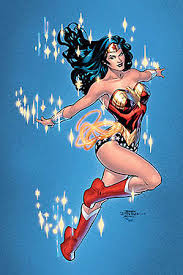
Meg Gardiner’s new book, The Shadow Tracer, has been receiving marvelous reviews this summer, deservedly so. Like her other books, this one is fast paced and riveting, with great pacing, wonderful characters, and a plot that twists and turns like a world-class roller coaster.

So why is it that I get irritated with some of the reviews of this book and others of hers?

Here’s one from Publishers Weekly about The Shadow Tracer: “Edgar-winner Gardiner’s second stand-alone (after Ransom River) boasts another of the strong female characters she’s known for and enough pulse-pounding action to satisfy the most avid thriller fan… packed with surprises and harrowing escapes.” 

Here’s one from the Associated Press about Ransom River: “Rory is a fantastic protagonist. She’s smart, quick-thinking, fiercely loyal and resilient. She’s the sort of action hero you want to see in movies: She can take multiple hits, and they just make her stronger.”

And here’s another from Library Journal: “Fans of the crime thriller genre will appreciate the well-drawn characters who plumb the depths of humanity and will connect with the especially strong female lead who perseveres to get back up more times than she falls.” 

Can you spot the common theme that irritates me? It’s the “strong female character” bit. Does anyone ever refer to male characters that way? Is Jack Reacher ever reviewed as a strong male character, or Adam Dalgliesh, or any other of the thousands of male protagonists?

Why is it that reviewers feel the need to point out the strength of Gardiner’s characters? True, the AP said that Rory is “smart, quick-thinking, fiercely loyal, and resilient.” Wonderful. “She’s the sort of action hero you want to see in movies.” Yes! But do we really need to know that she just gets stronger?

It’s as if, to be interesting to men, a woman has to be a strong character, versus a needy, fluffy, bon-bon-eating female. But that strong female must also be personable. Strong women characters get praised when they aren’t bitches, butch, unloveable, or unfeminine…that is,  when they counter the stereotype.

Think of strong women. Who do you picture, and what is your impression of them?

Nancy

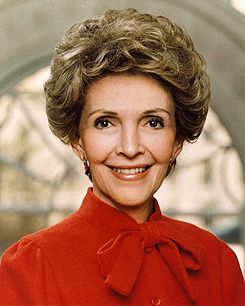
Nancy Reagan, ridiculed for her steely resolve and protective demeanor.

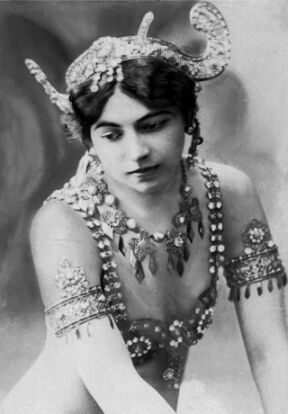
mata hari

Mata Hari, seductress and spy.

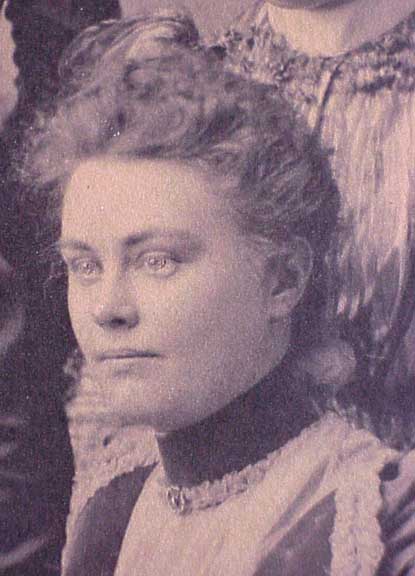
Lizzie

Lizzie Borden, ax-wielding murderer.

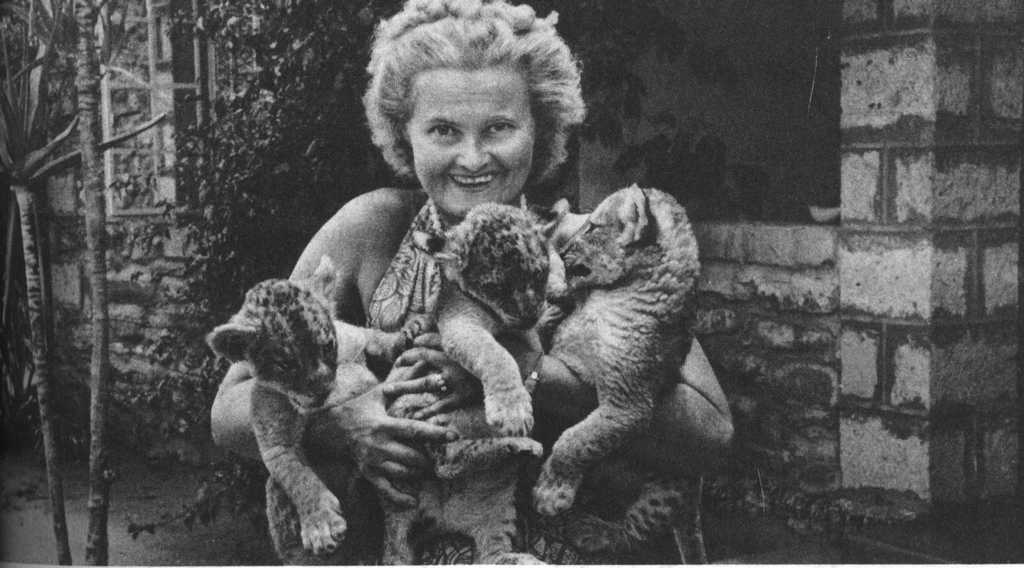
joy

Joy Adamson, who raised Elsa the Lion.

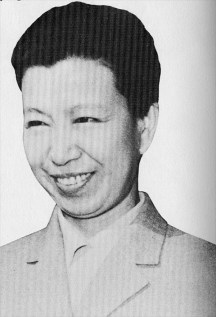
Jiang Qing

Jiang Qing, wife of Mao Zedong, aka Madam Mao.

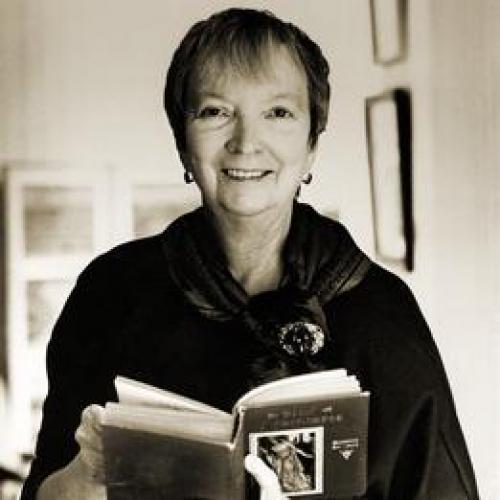
Madeleine_lengle

Madeleine L’Engle, writer.

Each of these women were strong in their own way, and yet few people would immediately refer to their strength when describing them. Perhaps they would in the case of Nancy Reagan, but that strength would be mockable, something to set her apart from the more feminine women in her world. (The power of the Reagan family.)

If we don’t immediately think of actual women that way, why is it that female book characters are described in those terms?

“Sherlock Holmes gets to be brilliant, solitary, abrasive, Bohemian, whimsical, brave, sad, manipulative, neurotic, vain, untidy, fastidious, artistic, courteous, rude, a polymath genius. Female characters get to be Strong,”  writes Sophia McDougall in The New Statesmen.

“No one ever asks if a male character is ‘strong’. Nor if he’s ‘feisty,’ or ‘kick-ass”’come to that. The obvious thing to say here is that this is because he’s assumed to be ‘strong’ by default. Part of the patronising promise of the Strong Female Character is that she’s anomalous. ‘Don’t worry!’ that puff piece or interview is saying when it boasts the hero’s love interest is an SFC. ‘Of course, normal women are weak and boring and can’t do anything worthwhile. But this one is different. She is strong! See, she roundhouses people in the face.’ Sometimes the phrase ‘not your typical damsel in distress’ will be used, as if the writing of pop culture heroines had not moved on even slightly since Disney’s Snow White and as if a goodly percentage of SFCs did not end up, in fact, needing to be rescued.”

I agree with McDougall’s entire premise: we devalue women if we refer to them simply as strong. Do they not matter if they’re not strong, but have other glorious characteristics and traits?

“What do I want instead of a Strong Female Character?” asks McDougall. “I want a male:female character ratio of 1:1 instead of 3:1 on our screens. I want a wealth of complex female protagonists who can be either strong or weak or both or neither, because they are more than strength or weakness. Badass gunslingers and martial artists sure, but also interesting women who are shy and quiet and do, sometimes, put up with others’ shit because in real life there’s often no practical alternative. And besides heroines, I want to see women in as many and varied secondary and character roles as men: female sidekicks, mentors, comic relief, rivals, villains. I want not to be asked, when I try to sell a book about two girls, two boys and a genderless robot, if we couldn’t change one of those girls to a boy.”

I had a meeting of my current book club today, and present with me were 11 strong women. That’s not the first adjective I’d use for most of them, but it wouldn’t be wrong. They wouldn’t be living the life of an ex-pat in a foreign country if they weren’t strong. But that’s not what defines them in real life, so why should it be so in fiction, or movies?

One of the bravest and strongest women I know is my Mom, who at the age of 19 married and moved away from home to follow her Army husband around the world for the next 25 years, sometimes raising their five kids alone while Dad was off at war.

My beautiful picture

THAT is strength! Yet, that wouldn’t be the first, second, or even tenth adjective I’d use for Mom. It’s simply part and parcel of who she is, of how she has survived and flourished. Why should it be any different for female protagonists in fiction and movies?

Creating Compelling Characters

Writers are fortunate when they encounter someone in real life who has “character potential,” someone who fills a page with story without effort. A man who has traveled the world hunting rare animals is such a character. A woman hiding with her children during a riot is another. For readers, these characters and their stories are immediately engaging. But writers can’t wait for these “characters” to fall into their laps.

Writers must learn to create such characters who elicit emotion from a variety of readers, without the godsend of such “real life” personalities. How do writers do this?

As Sol Stein (Stein on Writing) says, the writer must learn “the art of characterization, adding details and depth until he has created a character whom we may know better than all but our closest friends.”

Stein suggests that in real life, we writers are lazy. “We say the first thing that comes into our heads.” As an example, he describes a ticket-taker at a movie theater. That person interacts with a stream of people, and deals only in generalizations. That man is tall. That woman is skinny. But a writer must deal with such people differently.

“Frank is so tall, he entered the room as if he expected the lintel to hit him, conveying the image of a man with a perpetually stiff neck.”

That man is not just tall, as Stein writes him, but he is “being characterized through an action.”

As for the skinny woman,

“She always stood sideways so people could see how thin she was.”

Again, the character is described by action.

Characters are best individualized when we see them doing things and saying things, not by the author telling us about them.

One of the first pitfalls of most writers is telling our readers what the characters look like. Don’t ever stop your story to tell what a character looks like, or what a character is wearing (unless the clothing is vital to the scene or the characterization). Let the reader see your character talking and doing things.

Or, have another character describe that character:

I almost missed her at our meeting. She was lost in the crowd on 51st Street. Couldn’t even see her head, which is nuts considering that flaming red hair. I finally spotted her boots among all the other feet: polka-dotted rubber boots. I knew it had to be her.

or

I had trouble following what he was saying, ’cause I was so caught off guard by his lisp. What grown man lisps? Well-dressed in a nice suit with a nifty tie in a navy-and-green stripe, hair parted and combed to a gloss, and a lisp? How did drug dealers take him seriously?

Find the details that will embed the character in your reader’s mind’s eye and bring that character to life.

Generations: Know Your Characters’ Pasts

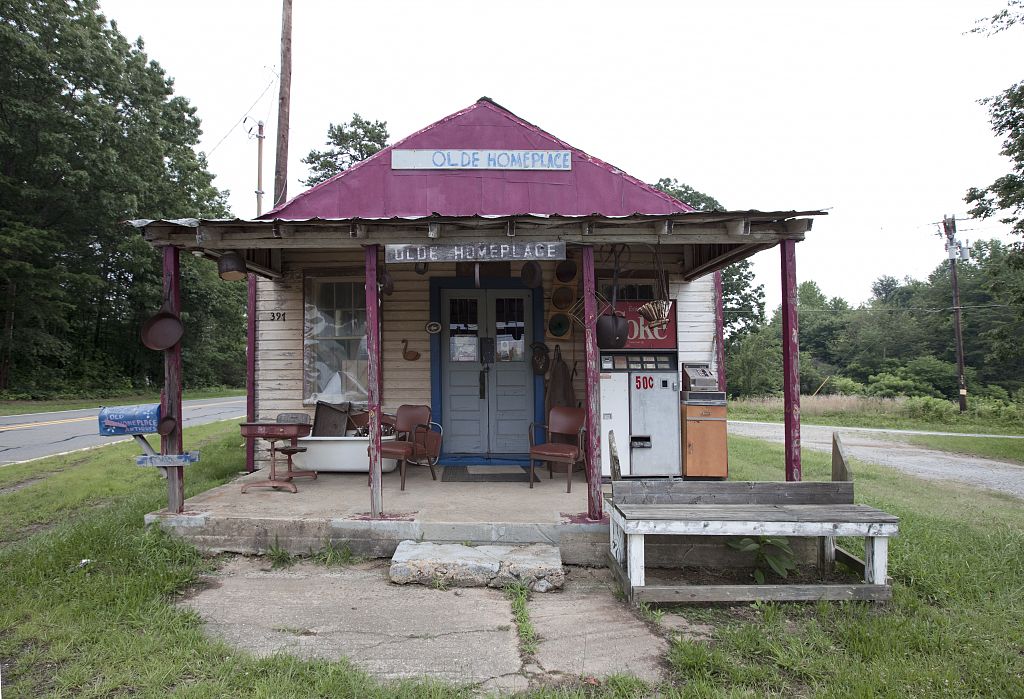
Old store in rural North Carolina

This is a post about generations, about how the lives of our parents were so much different from our own.

Visits to family roots are important, because it gives the younger generation a better understanding of where they have come from, who the folks were in  past generations. Many of us today take our advantages for granted: we have computers, smartphones, passports for travel, and the opportunity to move far beyond the confines of the city or town where we were born.

But it hasn’t always been that way. In the Middle Ages, people rarely left their villages, and there were no street signs pointing the way from village to village. If you left and went any great distance from home, you likely never found your way back. Those who traveled generally stayed wherever they landed.

It’s important to know your own family history if you are going to people your books with believable characters. Not that you have to include all of their history in the book, but that knowledge will help you to understand your character’s motivations.

My parents were poor, but they worked hard to give their children every opportunity for education and the social graces. We grew up not poor, on solid ground (I was unaware of how we struggled, thanks to Mom and Dad guarding us from that knowledge). And now, our children have grown up with the same opportunities and similar solid ground, but it’s important for them to know where the family started, and not that long ago. My father’s mother had to let two of her children leave the house and find their own ways as teenagers, because she couldn’t support four children on her own. She was married, but life circumstances forced her to raise the kids without her husband for a period in their life.

In turn, my father was the most devoted husband and father possible, even when life made separations inevitable, as it does when you’re in the U.S. Army. But his background made him who he is, and influenced my life and who I am, and my expectations of husband and family. I was molded by my parents’ lives and by the life they made for me as a child. I am who I am in large part because of them.

Look to your past. How were you raised? How were your parents raised? If you now live in the United States, there’s a real chance that your grandparents or great-grandparents emigrated to the United States. What were their lives like before and after? How did that affect who they became? Did that influence your parents’ lives, or yours?

None of us lives in isolation. We all come from somewhere, and we either embrace that past or run from it or try to ignore it. But the past exists, and it influences who we are. When you are creating your characters, keep that in mind. Let something in their past dictate who they are today. Use that knowledge to give substance to your main characters.

Know who the characters are now, but also be aware of their past, and of generations before them. This will enrich your characterizations, and give you unexpected food for story. Try not to simply create the characters you need, but allow them to become. Nourish their past, and you’ll see amazing results as you write.

Disturbing the Universe

Madeleine_lengle

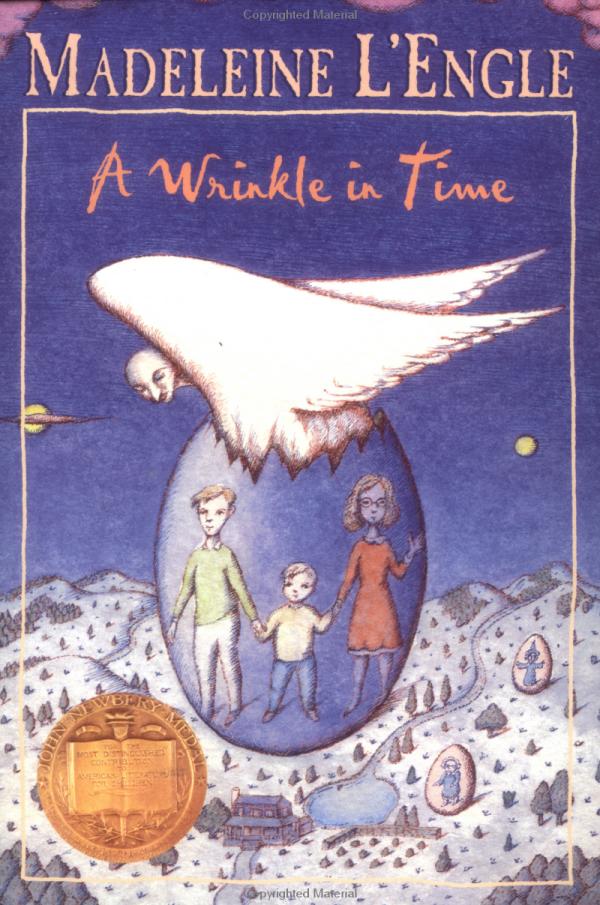
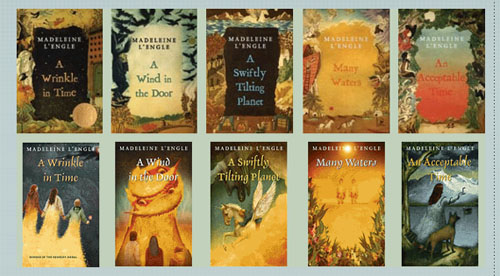
I am, and have long been, a huge fan of Madeleine L’Engle (d. 2007). Most people know her as the author of A Wrinkle in Time.

wrinkle

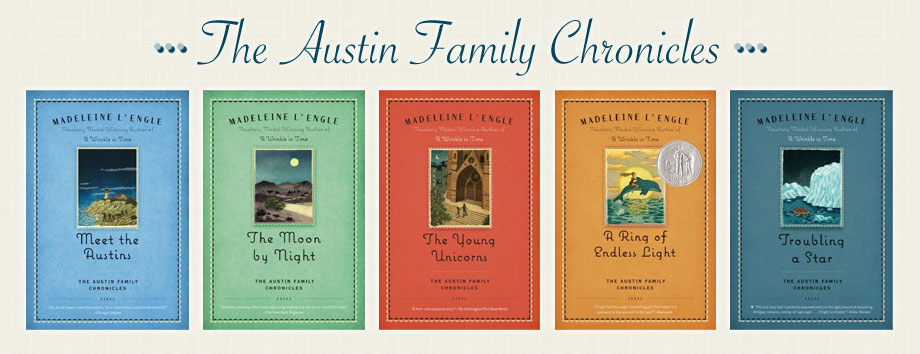
I discovered her through the Time series, and later through the Austin Family series, as a child.

slide5

As an adult, I read her numerous books on faith with great interest. She was an Episcopalian, a woman of strong faith and convictions, but a woman who wrote: Do we have the right to impose our own religious beliefs, from no matter which direction they come, on the rest of the world? I don’t think so.

If you haven’t yet read her speech on “Disturbing the Universe,” I highly recommend it. It’s available on Kindle for less than $2, I think. If you have read it, perhaps you won’t mind a refresher on her thoughts about writing.

The stories she cared about, wrote L’Engle, “the stories I read and reread, were usually stories which dared disturb the universe, which asked questions rather than gave answers.

6a00d8341c007f53ef00e54f1b09fa8833-800wi

“I turned to story, then as now, looking for truth, for it is in story that we find glimpses of meaning.”

She goes on, “But how apologetic many adults are when they are caught reading a book of fiction! They tend to hide it and tell you about the ‘How-To’ book, which is what they are really reading. Fortunately, nobody ever told me that stories were untrue, or should be outgrown, and then as now they nourished me and kept me willing to ask the unanswerable questions.”

Think about the stories you read when you were younger, either one-reads or those multiple-reads. Why did they enchant you? intrigue you? embrace your imagination? Did they open new thoughts to you, as well as expose you to new worlds?

“A book is the only place in which you can examine a fragile thought without breaking it, or explore an explosive idea without fear it will go off in your face. It is one of the few sources of information left that is served up without the silent black noise of a headline, the doomy hullabaloo of a commercial. It is one of the few havens remaining where a [person’s] mind can get both provocation and privacy.”

L’Engle wrote adult fiction as well as children’s fiction, but I think her most powerful fiction was that written for children. For it was there that she opened my mind, and exposed me to new ideas, and allowed me to grow in the safety of her pages.

“I believe that good questions are more important than answers, and the best children’s books ask questions, and make the reader ask questions. and every new question is going to disturb someone’s universe.”

Is disturbing the universe a bad thing? I don’t think it is. Without such disturbances, we become zealots, I think, convinced that we have all the answers and that everyone else should believe as we do. And zealotry is NEVER a good thing. As writers, we must be willing to shake up our own universes if we are to continue to nurture our readers. Entertainment is one of the main goals of fiction, of course, but that entertainment should also offer the opportunity for growth, I think, both for the writer and for the reader.

“Writing fiction is definitely a universe disturber, and for the writer, first of all. My books push me and prod me and make me ask questions I might otherwise avoid. . . . I have a pretty good idea of where the story is going and what I hope it’s going to say. And then, once I get deep into the writing, unexpected things begin to happen, things which make me question, and which sometimes really shake my universe.”

Shake your universe. Grow from your writing, and write with the intention of allowing your readers to grow. Shake their universe: ask the hard questions, and prompt them to ask more.

Living Language Slash You Bet!

I came across an interesting article on the Merriam-Webster Dictionary website the other day. (I use the site regularly, along with the Oxford Dictionary Online.)

It was a post by one of the site’s editors, and she discusses a new word currently in use in a new way, a change of which she approves.

The new word is “slash,” as in, I’m going to visit slash stay with my best friend in Colorado. While this is typically written as visit/stay with, Emily Brewster (the editor) explains that writing out the word “slash” now gives new meaning to the punctuation mark. 

It’s acting like a conjunction, or a follow-up word: I’m going to Colorado to visit my best friend, and moreover, I’m going to stay with her.

Brewster points out other instances where punctuation has become part of spoken language, but I won’t paraphrase here but will let you read about that on her blog. Period.

As an editor, I have to stay current with the changes in the English language, both here and in the UK, so it’s interesting to run across an article such as Brewster’s and wonder when publishers will take note of the use of slash and admit it to the publishing lexicon.

I hope slash fear it will take a while, since I need to get used to slash accept the idea of its new use.